Digestive System
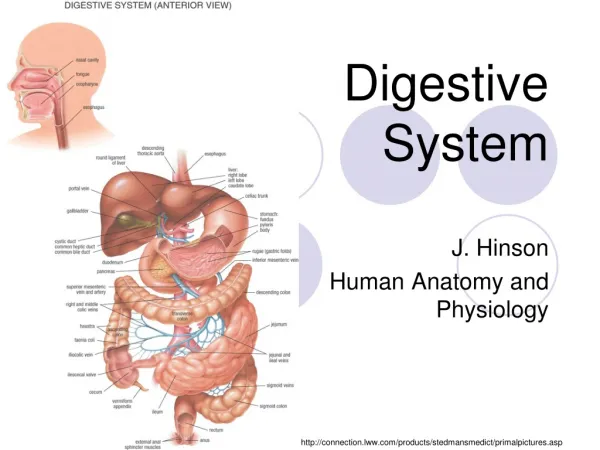
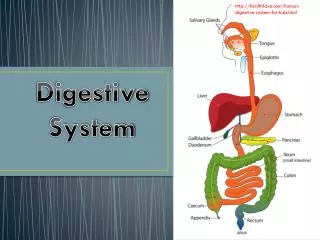
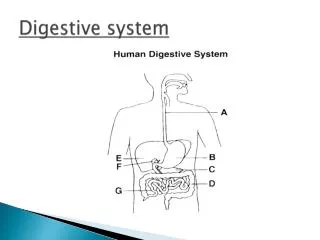
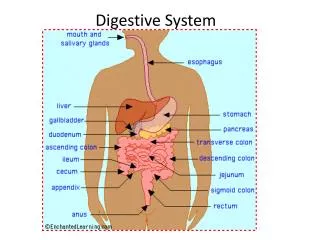
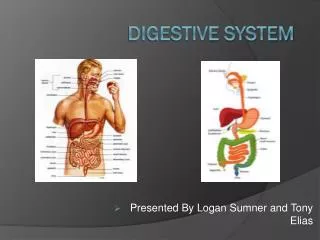
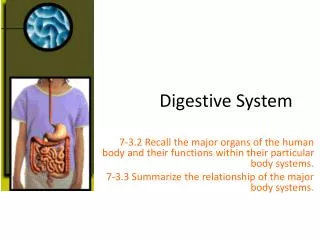
The digestive system is a complex network crucial for processing food and absorbing nutrients. It includes key organs such as the colon and small intestine, which absorb water and extract nutrients, respectively. The stomach digests food, while the liver filters blood and breaks down fats. The tongue and teeth play vital roles in food preparation, and the gallbladder stores bile to aid digestion. The pancreas produces essential enzymes, and the esophagus transports food to the stomach. This system ensures the body receives necessary nutrients while eliminating waste.

Digestive System
E N D
Presentation Transcript
Digestive System By: Rachel Rosenstiel, Katie Jackson, Madison Cook, and Brian Heinzman
Colon (Large Intestine) & Small Intestine Colon • It is shaped like a inverted ‘U’ • Located in the abdominal cavity • There are three main functions of the colon: • Absorb water • Stores remaining food • Eliminates solid waste from the body SmallIntestine • About six meters long stretched out • Located in the abdominal cavity • The function of the small intestine is to extract the nutrients from food digested • When food is blocked, unable to move, or contains bacteria it causes problems in the small intestine
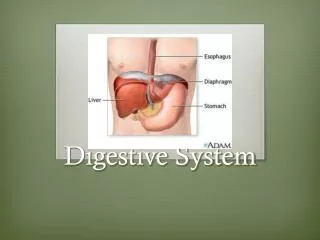
Stomach & Liver Stomach • Located between the esophagus & the intestines • The function is to digest food taken in • Composed of five layers • Mucosa • Submucosa • Muscularis • Subserosa • Serosa Liver • It weighs about three pounds • Blood is carried to the liver by two large vessels • It has many different functions • Break down fats • Filter harmful substances from blood • Produces cholesterol
Tongue & Teeth Tongue • Located on floor of the mouth • Carries taste buds • Has two main functions • Sends information to the brain from the taste buds about the food being eaten • Pushes the food down the throat to be swallowed Teeth • Located in the mouth • The function of the teeth is to tear and break down food to be swallowed • First in the digestive system
Gall Bladder & Pancreas GallBladder • Shaped like a pear • The gallbladder is located behind the liver on the right side of the rib cage • Stores bile • Bile is an acid that helps break down food Pancreas • Located beneath the stomach and is connected to the small intestine • Helps break down proteins, starch, and fats • Produces enzymes
Esophagus & Salivary Glands Esophagus • Using the coordinated contractions, the esophagus transports food to the stomach • One main function: • To carry food, liquids, and saliva from the mouth to the stomach Salivary Glands • The salivary glands produce saliva • Functions of the salivary glands: • Moistens dry foods so you can swallow it
Pharynx Pharynx • Connects to mouth and nasal chambers • The function is to provide a passageway for air and food. • Also known as: • Nasopharynx- Nasal chambers • Oropharynx- Mouth