Understanding Global Warming: Causes, Effects, and Implications for Our Planet
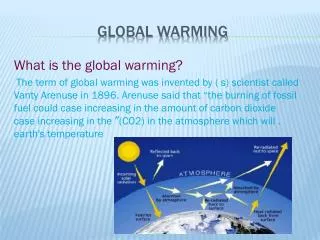
Global warming refers to the rising temperatures of Earth's atmosphere due to greenhouse gas emissions. In the last century, the average surface temperature has increased by 0.8°C, with significant changes occurring in recent decades. Key contributors include carbon dioxide from fossil fuels, methane from agriculture and livestock, and deforestation. The consequences are dire: rising sea levels, altered precipitation patterns, extreme weather events, destabilized agriculture, and threats to wildlife. Understanding these factors is crucial for addressing climate change and protecting our planet.

Understanding Global Warming: Causes, Effects, and Implications for Our Planet
E N D
Presentation Transcript
Global Warming By: Jennifer Travis
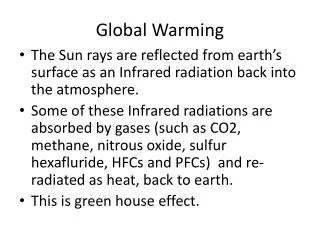
What is Global Warming? • Global Warming is the increase in the temperature of the worlds atmosphere caused by greenhouse gases. • In the past 100 years, the earths average surface temperature has increased by 0.8°C with 2/3 occurring just in the past 3 decades.
What causes Global Warming? • Carbon dioxide emissions from fossil fuel burning power plants. • Carbon dioxide emissions from burning gasoline for transportation. • Methane emissions from animals, agriculture such as rice paddies, and from Arctic sea beds. • Deforestation, especially tropical forests for wood, pulp, and farmland • Increase in usage of chemical fertilizers on croplands
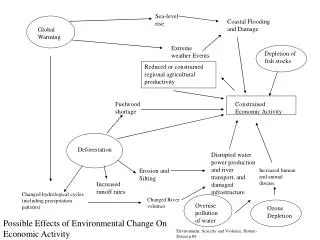
What effect does Global Warming have on our earth? • An increase in temperature will cause sea levels to rise and will change the amount of precipitation. • It will cause more extreme weather conditions such as heat waves, drought, and heavy rainfall. • The Arctic Tundra is melting which may cause an increase in methane levels in the atmosphere. • Due to the climate, the agricultural market has become unstable , less efficient and therefore more expensive. • Animals species will become wiped out.