Plate Tectonics
This lesson explores the theory of continental drift, which posits that about 200 million years ago, all continents were unified as a single supercontinent called Pangaea. Through tectonic plate movements, these continents have drifted apart to their present positions. Key objectives include identifying and locating major tectonic plates, understanding plate margins, and describing associated landforms. Learners will also examine the formation of earthquakes, volcanoes, and fold mountains globally, with a specific focus on the Caribbean region.

Plate Tectonics
E N D
Presentation Transcript
Plate Tectonics Lesson 2 Continental Drift and Major Plates
Objectives • Explain the continental drift theory. • Name and locate the major plates & plate margins. • Name and locate the Caribbean & adjacent plate • Draw simple diagrams of each plate margins. • Describe each plate margin • Identify the landforms associated with each plate margin. • Explain the formation and distribution of earthquakes, volcanoes and fold mountains globally and in the Caribbean.
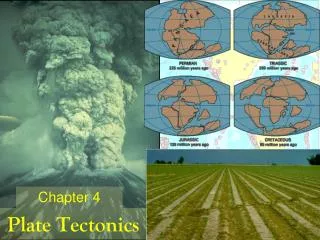
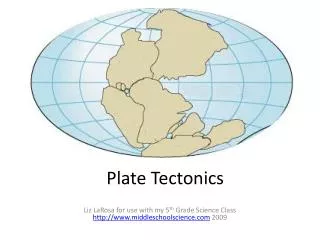
The continental drift theory states that about 200 million years ago all the continents were joined together into one large super continent known as Pangaea. Due to plate movement over time these continents moved away from each other to form the continents that we know today. Continental Drift
Websites • http://www.youtube.com/watch?v=BRmvgrAeCbo&feature=related • http://www.suu.edu/faculty/colberg/hazards/platetectonics/18_Pangaea.html
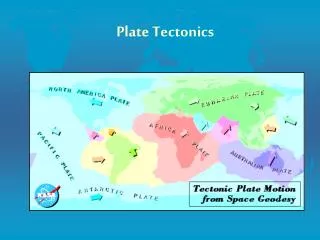
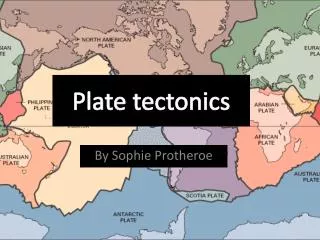
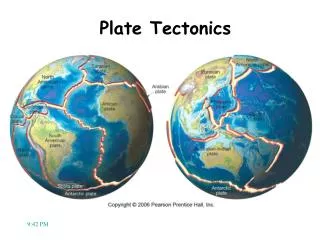
Location of Plates Eurasian Plate North American Plate PhilippinePlate Juan de Fuca Plate ArabianPlate Caribbean Plate Pacific Plate African Plate Cocos Plate South American Plate Nazca Plate Australian-Indian Plate Antarctica Plate