Download
1 / 14
140 likes | 235 Vues
Learn about the production process for Fab fragments used in antibody therapy, targeting VEGF to inhibit tumor growth. Discover the benefits of smaller-sized Fab fragments and efficient production techniques like using Hollow-Fiber Bioreactors and Affinity Chromatography.

E N D
Process design for the production of Fab fragment for therapy Group 6 Shiang-Yuan Hsieh, Yun-Hsuan Liu, Chao-Ming Yen
Bevacizumabv.sRanibizumab • Anti-angiogenic drugs: block the formation of new blood vessels to inhibit tumor growth • By targeting and inhibiting the function of a natural protein called vascular endothelial growth factor (VEGF) • The whole antibody versus a antibody fragment
Antibody • Also called immunoglobulins (Ig) that used by immune system. • Five classes of Ig: IgA, IgE, IgG, IgD, IgM.
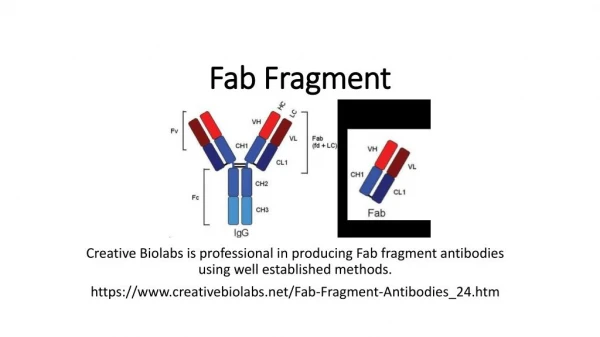
Fragment antigen binding(Fab fragment) • A region on an antibody which binds to antigens • Composed of one constant and one variable domain of each of the heavy and the light chain
Why make Fab Fragments? • Smaller size that can promote the efficiency of penetration of tissue section. • Reduce nonspecific binding that results from Fc interactions. • Potentially higher sensitivity in antigen. • Reduce the risks from immune response. • Production is more economical.
Production large scale up - Use Hollow-Fiber Bioreactor
Production large scale up - Use Hollow-Fiber Bioreactor
Antibody Purification - Affinity Chromatography Use the original VEGF as the antigens Other antigens (Gammabind G Sepharose) Barbaset al. (2001).
Antibody Purification - Use Device: Gradiflow
Products Recoveries: Affinity Chromatography vsGradiflow