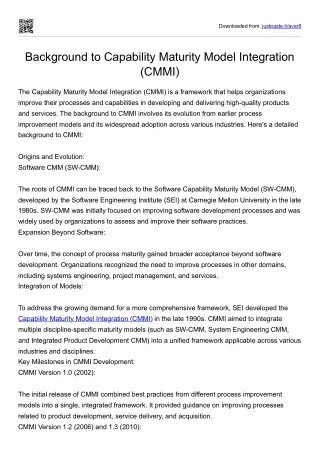
How Does CMMI Improve Process Maturity
<br>CMMI improves process maturity by providing a structured evolutionary path. It moves an organization away from a "Hero Culture" (where success depends on individuals working overtime) toward a "Process Culture" (where success is a predictable result of the system).
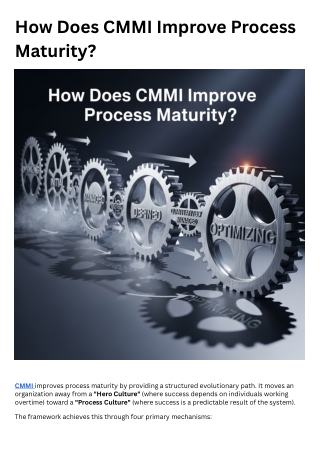

How Does CMMI Improve Process Maturity
E N D
Presentation Transcript
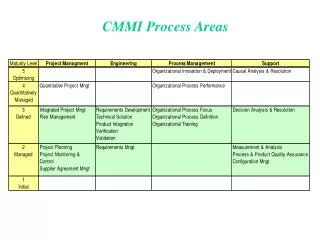
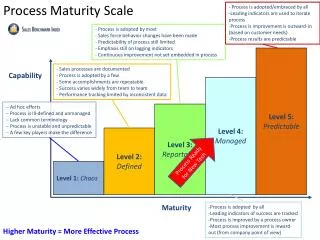
How Does CMMI Improve Process Maturity? CMMI improves process maturity by providing a structured evolutionary path. It moves an organization away from a "Hero Culture" (where success depends on individuals working overtime) toward a "Process Culture" (where success is a predictable result of the system). The framework achieves this through four primary mechanisms:
1. Incremental Habit Building (The 5 Levels) Process maturity is a marathon, not a sprint. CMMI breaks this journey into five levels to ensure the foundation is solid before adding complexity. Level 2 (Managed): Projects are managed individually. You stop the "bleeding" by introducing basic project management, requirements tracking, and configuration control. Level 3 (Defined): The "Aha!" moment. Processes are standardized across the entire organization. Everyone follows the same set of "best practices," which are tailored for specific projects. 2. Institutionalization (The "Sticky" Factor) The biggest hurdle to maturity is "process drift"—the tendency for teams to stop following rules when things get busy. CMMI improves maturity by Institutionalizing processes through: Policies: Management officially mandates the process. Resources: Providing the tools and funding to actually do the work (e.g., Jira, Jenkins, or specialized training). Governance: Objective evaluations (audits) to ensure the process isn't just "shelf-ware" but is actually being used. 3. Feedback Loops and Causal Analysis Maturity improves when an organization stops making the same mistake twice. CMMI introducesCausal Analysis and Resolution (CAR). Instead of just fixing a bug (reactive), the team analyzes the root cause of why the bug was created and why it wasn't caught sooner. The process is then updated to "vaccinate" the team against that specific error in future sprints. 4. Statistical Performance Management At high maturity (Levels 4 and 5), "improvement" is no longer a guess. Process Performance Baselines (PPBs): You calculate your team's "normal" performance (e.g., "We usually find 5 bugs per 1,000 lines of code"). Quantitative Control: If a project deviates from this baseline, you have the statistical proof to intervene early. Maturity is reached when you can mathematically predict your project’s outcome before you even start. The Maturity Transformation
Aspect Immature Process Mature (CMMI) Process Success A "fluke" or due to heroics. A predictable, repeatable outcome. Requirements Vague and constantly changing. Documented with full traceability. Estimation Based on "gut feeling." Based on historical data. Quality Inspected at the end (too late). Built-in via peer reviews and V&V. Why this matters for Engineers A mature process means fewer "fire drills." When the process is mature, deadlines are realistic, requirements are clear, and your weekends are protected because the system handles the complexity, not your nervous system.