Understanding Acids and Bases: Definitions, Characteristics, and Examples
This informative overview defines acids and bases, including their characteristics and common examples. An acid is explained as a compound that contains hydrogen ions (H+), known for its sour taste, ability to turn blue litmus paper red, and reactions with bases and metals. Conversely, a base is defined as a compound containing hydroxide ions (OH-), recognized for its bitter taste, soapy feel, and its role in turning red litmus paper blue. This guide also provides examples of common acids and bases found in everyday life, such as hydrochloric acid, citric acid, and sodium hydroxide.

Understanding Acids and Bases: Definitions, Characteristics, and Examples
E N D
Presentation Transcript
ACIDS & bases 9 Sci – Term 4
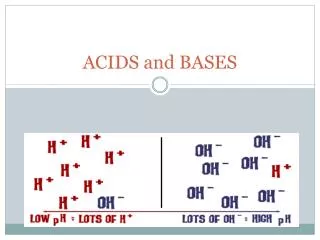
What is an Acid? Definition: An acid is a compound that contains hydrogen ions (H+) • H+Hydrogen Ion is essentially a proton • Acid’s give protons (H+ hydrogen ions)
Characteristics of Acids Acids are characterised by: • Sour taste • Turns blue litmus paper red • Reacts with bases to form salts • Reacts with metals to form hydrogen gas If chemicals have properties of an acid, they are said to be acidic.
What is a Base? Definition: A base is a compound that contains a Hydroxide Ion (OH-). • Bases readily receive protons (H+)
Characteristics of Bases Bases are characterised by: • Bitter taste • Soapy feel – They react with natural oils on the skin to produce soap • Turn red litmus paper blue • React with acids to form salts Bases which are soluble in water are called Alkali’s. A basic solution is referred to as being alkaline.
What is Litmus paper? Litmus is made from lichen (fungus and algae/bacteria). It is a natural indicator which changes colour in the presence of acids and bases.
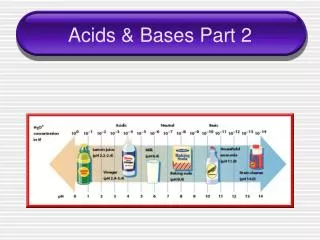
Examples of common Acids • Hydrochloric Acid (Gastric juice, household cleaners) • Lactic Acid (exercise build-up) • Sulfuric Acid (Drain cleaner, batteries) • Citric Acid (Fruits) • Carbonic Acid (Soft drinks) • Acetic Acid (Vinegar)
Examples of common Bases • Sodium Hydroxide (Caustic soda, soaps, detergents) • Calcium Hydroxide (Limewater) • Ammonia (Fish pee) • Sodium Bicarbonate (Bicarb Soda) • Magnesium Hydroxide (Antacids, laxatives)