Download
1 / 9
100 likes | 249 Vues
The Netherlands employs integrated adaptation strategies across various policy areas, primarily focusing on water management due to the country's geographical vulnerability, with around 50% of its land below sea level. While there's no specific national adaptation policy, sector-specific vulnerability assessments are prevalent, particularly in water management. Adaptation costs remain largely unknown, and research influences many sectors, including agriculture and spatial planning. The complexities of climate change impacts and the necessity for transboundary measures highlight the ongoing challenges in developing robust adaptation strategies.

E N D
Adaptation in the Netherlands Bas Clabbers Ministry of Agriculture, Nature and Food Quality the Netherlands
Adaptation strategy • No specific adaptation strategy or policy plan integrated in other policy areas • Sector specific vulnerability assessments (most common in water sector) • Adaptation policies most strongly developed in water sector (both planning and implementation)
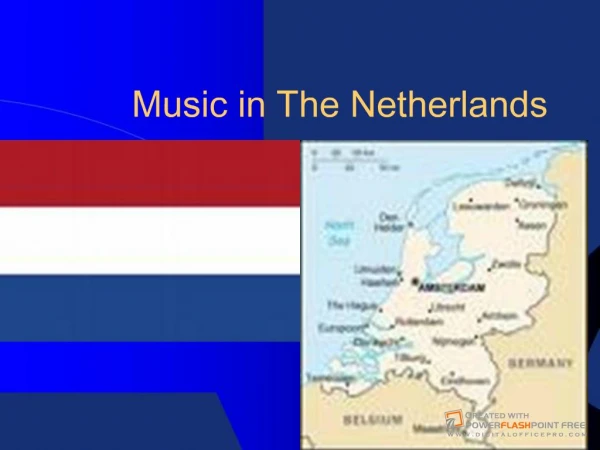
The Netherlands • Around 50% of the country lies below sea level and it lies on the delta of three rivers (Rhine, Maas or Meuse and Schelde) • Lowest point: Zuidplaspolder – 7 m. • Highest point: Vaalserberg 322 m.
Adaptation strategy(continued) • Research dominates policy agenda in other sectors (e.g. spatial planning, agriculture, nature) • Costs of adaptation are largely unknown and not budgeted for
Hurdles • Uncertainties of impacts of climate change • National policy versus local/regional implementation • Transboundary measures are sometimes needed • Climate change is only one of the influences on different policy areas • Mid-term focus of most policy areas versus long term impacts • The climate changes gradually
Concluding remarks • An overall national adaptation strategy may not be needed • Hurdles in national adaptation strategies might be even bigger in an international strategy or instrument • Joint research and sharing experiences on methods and tools might be useful