Human Reproductive Systems: Male and Female Reproduction
Dive into the male and female reproductive systems, from sperm formation and ovum development to fertilization, menstrual cycle phases, and the stages of pregnancy and birth.

Human Reproductive Systems: Male and Female Reproduction
E N D
Presentation Transcript
Bellwork – 5/4/15 Define Hypothalamus: Portion of the brain that connects the endocrine and nervous systems, and controls the pituitary gland. Main Idea: Hormones regulate human reproductive systems, including the production of gametes.
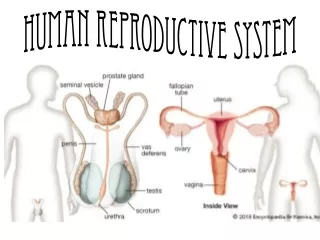
Sperm Formation • MEIOSIS • Form in testes • Temperature important! • Scrotum • Leave testes via epididymus to the vas deferens
Semen • Fluids help to transport, feed, and protect sperm • Seminal vesicles • Prostate gland • Bulbourethral glands
Secondary Sexual Characteristics - Male • Produced by testosterone • Deeper voice • Axillary and pubic hair • Chest and facial hair • Lengthen bones • Increased size of testes for sperm production
Bellwork – 5/5/15 Define Fertilization – Process by which haploid gametes combine, forming a diploid cell with 2n chromosomes, with n chromosomes from the female parent and n chromosomes from the male parent.
Bellwork – 5/5/15 Main Idea – A human develops from a single fertilized cell into trillions of cells with specialized functions.
Ovum Formation • MEIOSIS • Ova are formed before birth • 1 ovum per month is matured and released from ovaries
Secondary Sexual Characteristics - Female • Induced by increased LH, FSH, estrogen, and progesterone hormone levels • Axillary and pubic hair • Widen pelvis • Enlarge mammary tissue • Begin menstrual cycles
Fertilization • Occurs in upper 1/3 of Fallopian tube • Once one sperm enters, egg membrane changes • Fertilized egg = zygote
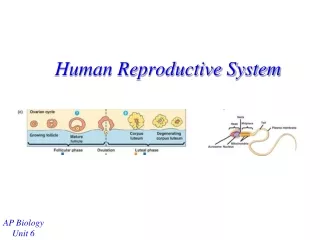
Menstrual Cycle • The length of the menstrual cycle can vary from 23 to 35 days. • Three phases: • Flow phase • Follicular phase • Luteal phase
Flow Phase • Menstrual flow is the shedding of blood, tissue fluid, mucus, and epithelial cells from the endometrium – the tissue that lines the uterus. • If fertilization does not take place, outer layers of the endometrium tear away, and blood vessels that supply the tissue rupture.
Follicular Phase • Anterior pituitary begins to increase production of LH and FSH. • This stimulates a few follicles to begin to mature in the ovary. • Inside each follicle is an immature egg – the oocyte. • Rapid release of LH causes ovulation.
Luteal Phase • After ovulation, the cells of the follicle change, and the follicle is transformed into a structure called the corpus luteum. • Corpus luteum breaks down, no longer producing progesterone and estrogen at end of cycle
Menstrual Cycle • A rapid decrease in hormones triggers detachment of the endometrium, and the flow phase of a new menstural cycle will begin.
Implantation • Implanted into thick walls of uterus • Chorion membranes dig into uterus to form placenta • Embryo supported via umbilical cord • Once pregnant, progesterone levels stay high in mom
1st Trimester • Heart develops first • Neural tube develops • All body systems appear by Week 8 – Now a Fetus
2nd Trimester • Mostly growth • Looks more like a baby • Some preemies survive at this stage
3rd Trimester • More growth • Kicking, rolling, stretching • Eyes open – Week 32 • Lungs mature • Rotates to head-down position
Birth • Labor • Uterine contractions begin • Cervix dilates to 10 cm. • Birth • Uterus pushes baby through vaginal canal • Placenta delivered after