Dynamic Range of Neurons: Impact of Efferent Activity on Discharge Rates in Cats
This study investigates the dynamic range (DR) of auditory nerve fiber (ANF) discharge rates in cats, focusing on how noise and an active olivocochlear efferent system influence neuronal response. Notably, awake cats exhibit greater shifts in DR under noisy conditions compared to anesthetized ones, demonstrating a significant difference in noise-induced compression. The findings suggest that sound-evoked efferent activity may enhance auditory processing and intensity coding, particularly in challenging auditory environments. These insights advance our understanding of auditory system adaptation and noise management.

Dynamic Range of Neurons: Impact of Efferent Activity on Discharge Rates in Cats
E N D
Presentation Transcript
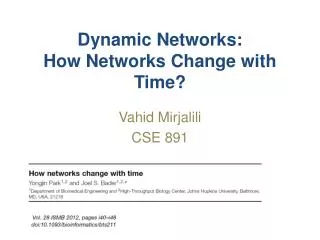
Dynamic change • Dynamic change: the range of stimulus levels over which a change in level produces a change in a neuron’s discharge rate • Dynamic range of ANF: <35 dB at CF • DR reduced when embedding in noisy background
Human can discriminate 100-dB range of stimulus (behavior test) • Possible reasons: Olivocochlear efferent system • Hypothesis: sound-evoked efferent activity may exert an greater influence on DR in awake animals than in anesthetized ones
PSTH from single-unit in VCN Pri-Notch Chopper Units Onset Unit Pri-like
Noise-inducedshiftof CF rate-level function (from VCN chopper unit) Noise-induced horizontal shift Larger shift at awake cats (p< 0.0001)
Noise-inducedshift(cont) Chopper < pri-like at lower level Awake chopper vs awake pri-like vs anesthetized
Noise-induced compression Less compression in awake cats Anesthetized cats could not respond at background of >50 dB because of saturation
Adaptation in noisy environment Adaptation SR
Noise-induced compression Awake chopper vs awake pri-like vs anesthetized
Summary • Larger shift & less compression: higher DR in VCN units of awake cats than in ANFs in anesthetized cats or VCN units in decerebrate cats • Otherwise most characteristics are similar (awake vs anesthetized in quite, PST response type)
Explanation: the cochlea and auditory nerve are unaffected by anesthesia. • Olivocochlear system (or other descending systems) could very well be affected by anesthesia • Descending systems are important for intensity coding and detection in background noise.
COCB effects on ANF of anesthetized cats With COCB stimulation, higher Shift & lower compression higher DR Winslow et al 1987