Key Components of Legal Pleadings: Complaints, Answers, and Summons Explained
Understanding the essentials of legal pleadings is crucial for navigating the judicial process. The Complaint is initiated by the Plaintiff, outlining facts, jurisdiction, and relief sought, and must be served with a Summons to the Defendant. The Answer, filed by the Defendant, addresses the issues raised and may include counterclaims. Timeliness is vital; failure to respond can lead to default judgments. This overview highlights the purpose and requirements of each pleading, ensuring both parties are aware of their duties in litigation.

Key Components of Legal Pleadings: Complaints, Answers, and Summons Explained
E N D
Presentation Transcript
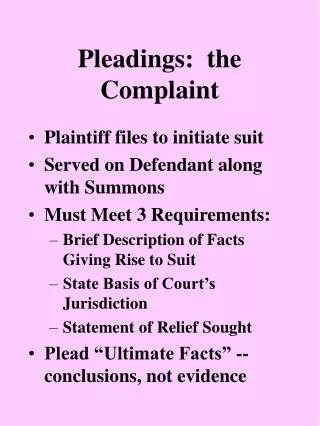
Pleadings: the Complaint • Plaintiff files to initiate suit • Served on Defendant along with Summons • Must Meet 3 Requirements: • Brief Description of Facts Giving Rise to Suit • State Basis of Court’s Jurisdiction • Statement of Relief Sought • Plead “Ultimate Facts” -- conclusions, not evidence
Pleadings: the Answer • Filed by Defendant in Response to Complaint • Must Address Issues Raised in Complaint • May Include Counterclaim -- D also suing Plaintiff • Failure to respond within time limit may cause Default Judgment
Pleadings: the Summons • Issued by the Court • Informs Defendant that suit has been filed • Directs Defendant to Respond by Filing Answer to Complaint with appropriate time period • Served on Defendant along with Complaint



![G2 - OPERATING PROCEDURES [6 Exam Questions - 6 Groups]](https://cdn0.slideserve.com/516317/g2-operating-procedures-6-exam-questions-6-groups-dt.jpg)





![G2 - OPERATING PROCEDURES [6 Exam Questions - 6 Groups]](https://cdn2.slideserve.com/4759212/g2-operating-procedures-6-exam-questions-6-groups-dt.jpg)
![G2 - OPERATING PROCEDURES [6 Exam Questions - 6 Groups]](https://cdn2.slideserve.com/4759217/g2-operating-procedures-6-exam-questions-6-groups-dt.jpg)