The Preterite Tense
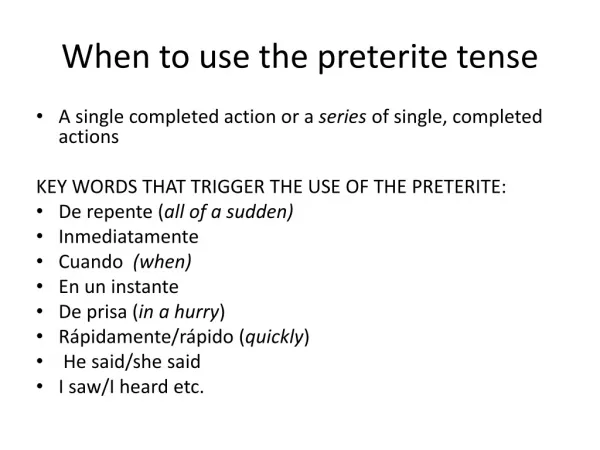
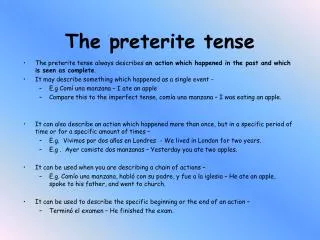
The Preterite Tense is essential for expressing completed actions that occurred at specific times in the past. This includes key phrases like "Ayer," "La semana pasada," and "El año pasado." Understanding its formation is crucial as it sets the stage for the Imperfect Tense in Spanish II, which describes ongoing past actions. The Preterite features irregular conjugations for -car, -gar, -zar verbs in the first person, as well as unique forms for common verbs like "ir," "ser," "estar," and "hacer." Mastering the Preterite will empower your communication about past events.

The Preterite Tense
E N D
Presentation Transcript
The Preterite Tense Your past is your future… Asian proverb (Not really)
The Preterite Tense • Used to express an action completed at a definite time in the past… (remember this it will come in handy when you learn the imperfect in Spanish II, which is also a passed tense but it is describing the past), you DEFINITELY KNOW that it occurred in the past. Said and done, written in the books… BAM BOOM OVER WITH = The Preterite Tense JUST LIKE THIS SLIDE
Get a clue… • Ayer… • La semanapasada… • El año pasado… • Desdeayer… • El ______ pasado…(day) • El _________. (day)
The Preterite of Regular –ar Verbs… the jig continues… you drop the –ar and add…
THE WEIRDOS…in yo form-CAR,-GAR, ZAR Verbs • Buscar- to look for • Jugar- to play • Almorzar- to each lunch Any verb ending in –car, -gar, or –zar, will be irregular in the yo form of the preterite.
Preterite of Ir(to go) and Ser(to be)… are the exact same thing… WOAH.