Enlightenment and Revolution
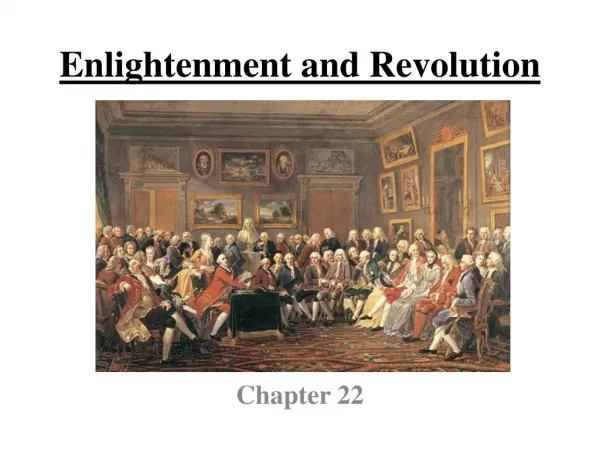
The Enlightenment was a transformative period characterized by the emergence of reason, scientific thought, and the questioning of traditional authority. Key figures like René Descartes, David Hume, and John Locke contributed to themes of progress and scepticism. The movement fostered a vibrant intellectual culture through salons, academies, and the proliferation of cheap books and journals, which facilitated the spread of ideas. Works like Montesquieu's "The Spirit of the Laws" and Rousseau's "The Social Contract" laid the foundation for debates on governance and equality, shaping modern democratic principles.

Enlightenment and Revolution
E N D
Presentation Transcript
Enlightenment Themes • Reason • Scientific method • Progress • Scepticism • Rene Descartes (1596-1650) • David Hume (1711-1776)
John Locke (1632-1704) Two Treatises on Government
Charles-Louis de Secondat (Montesquieu) (1689-1755) Spirit of the Laws (1748)
Jean-Jacques Rousseau (1712-1778) The Social Contract (1762)
Broadening Discussions • Transnational “Republic of Letters” • Academies • Salons • Increasing literacy • Cheap books • Academic journals • Bookstores • cafés