The Structure and Function of Macromolecules
380 likes | 516 Vues
This chapter explores the essential macromolecules of life, including carbohydrates, lipids, proteins, and nucleic acids. It discusses the formation and breakdown of polymers through enzymatic reactions, highlighting processes like dehydration synthesis and hydrolysis. Key concepts include the various classes of carbohydrates (like monosaccharides, disaccharides, and polysaccharides), lipid properties, protein structures, and the role of nucleic acids in genetic information storage and transmission. The intricate relationships between structure and function are emphasized throughout.


The Structure and Function of Macromolecules
E N D
Presentation Transcript
Molecules of Life • Another level of the hierarchy of biological organization is reached when small organic molecules are joined together • A polymer is a long molecule consisting of many similar building blocks called monomers
Classes of Macromolecules • Lipids • Carbohydrates • Proteins • DNA/RNA
Synthesis and Breakdown of Polymers • Enzymes: Used to make and breakdown polymers • Dehydration reaction (Condensation synthesis): Monomers combined by covalent bond and a water molecule is lost • Hydrolysis: To disassemble a polymer the water is added and the molecule separates.
Prefixes • Mono means 1 • Di means 2 • Tri means 3 • Poly means multiple
Carbohydrates (Saccharides) • Carbohydrates are sugars; many are polymers • Monosaccharides have the molecular formula CH2O or some multiple thereof Ex C6 H12 O6 • Disaccharides consist of two monomers joined by a glycosidic linkage • Storage Polysaccharides ; Starch in plants, glycogen in animals- more structurally branched • Structural Polysaccharides: Cellulose- major plant cell wall component
Monosaccharides shape • Exist in 2 forms • Linear • Circular • The two forms are interchangeable
Lipids • Lipids are more commonly known as fats • Lipids are non-polar molecules; they are not water soluble • They are hydrophobic • Lipids are important for energy storage • Fatty acids, Phospholipids, Steroids
Fatty acid chains can vary in • Length • Number of double bonds • Placement of the double bonds • Saturated fats have no double bonds • Solid at room temp • Unsaturated fats do have double bonds • Liquid at room temp
Phospholipids • Diglycerides with a phosphate group attached to glycerol backbone • Phosphate group is negatively charged • Fatty acid tails are non-polar and hydrophobic
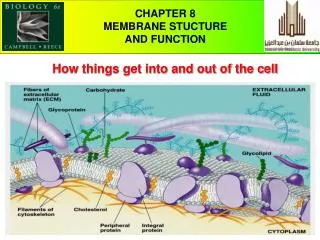
Phospholipids • In aqueous enviroments, phospholipids spontaneously from aggregates • Hydrophobic tails are protected from the water. • Phospholipids are a major component in membranes
Proteins • Proteins account for more than 50% of cell dry wt • Protein Functions • Structural • Contractile • Storage • Defense • Transport • Signaling • Catalysts
Proteins • Amino Acids are the building blocks of protein • There are 20 amino acids, 9 are essential = must eat them we cannot synthesize • phenylalanine, valine, threonine, tryptophan, isoleucine, methionine, leucine, lysine, and histidine • Polypeptides are many amino acids joined together • The function of a protein depends on its chemical structure and unique 3-D shape
Levels of Protein Structure • Primary Structure: Unique sequence of amino acids: sequence is determined by genetic material • Secondary Structure: coiling /folding as a result of hydrogen bonding • Tertiary Structure: 3-D shape due to bonding of R- groups and amino acids • Quaternary Structure: association of 2 or more polypeptides; Ex HGB ; not all have this level
Peptide Bonds between amino acids 2 Shapes R groups react: Hydrogen Bonds Disulfide Bridges Ionic bonds Hydrophobic Interactions Hydrogen Bonds Between carbon backbone Multiple polypeptides
Chaperons/Chaperonins • What levels of structure was being formed in the picture? • What predominantly holds these level together?
The “Blue Gene” Computer • IBM has a project • They hope to be able to take any amino acid sequence and produce a computer generation of the folded protein • Currently there are no computers powerful enough to do this
Denaturation • Denaturation means the protein structure is destroyed • Causes of denaturation include: • heat • pH • chemicals • Salt concentrations
Enzymes • Enzymes are proteins used to speed up chemical reactions = Catalysts • They are not consumed or converted in the reactions • In Ch 8 we will go into more detail
Nucleic Acids • Nucleic Acids carry information • Function is to store and transmit heritable information • DNA = carries all codes for life; double stranded • RNA = protein synthesis • Nucleotides/Nucleic Acids are composed of: • Nitrogenous Base:ATGC • Pentose = 5 Carbon sugar • Phosphate group • In DNA A pairs with T ; G with C
Nucleic Acids are the building blocks of protein • True • False
What macromolecule could be made from H, C, NH2,COOH, R • lipid • nucleic acid • carbohydrate • Amino acid
Checklist • What are the 4 macromolecules? What is the monomer, polymer and bonds that are found for each macromolecule? • Making polymers form monomers is called? • Breaking down polymers into monomers is? • What are the characteristics of fats? Saturated? Unsaturated? • What are the characteristics of carbohydrates?
Checklist • What part of the protein is involved in dehydration reactions? • What makes each protein unique? • What makes each amino acid unique? • What are nucleic acids? • What are enzymes? • What are the 4 levels of protein structure? What bonds are seen in each?