Exploring Prairie Soils: America's Agricultural Heartland
The prairies of America, often referred to as "America's Breadbasket," play a crucial role in food production, yielding essential crops like corn, wheat, and soybeans. These grasslands, characterized by diverse species and rich Mollisol soils, provide a unique ecosystem where various organisms thrive. Understanding the significance of prairie soils is vital for maintaining their fertility, which supports livestock and crop production. Through natural processes like nutrient cycling from animals and organic matter, these soils sustain agricultural productivity.

Exploring Prairie Soils: America's Agricultural Heartland
E N D
Presentation Transcript
Prairie Soils America’s Breadbasket
Most of OUR FOOD comes from the Prairies! Including corn, wheat and soybeans… Can you think of things that are made out of these products?
Prairie Soils are a type of GRASSLAND. It is too DRY to be a forest, and too WET to be a desert.
So a diverse species of grasslands developed. At the end of the year, grassland plants die back, but their leaves and roots remain, acting like a MULCH. Why is this good for the SOIL?
There are three types of prairie: Short grass grows in the far western states that are dry, like Montana, and Colorado. Tall grass grows where it is wet, like in Illinois and Iowa. In states like North and South Dakota, the grasses are mixed.
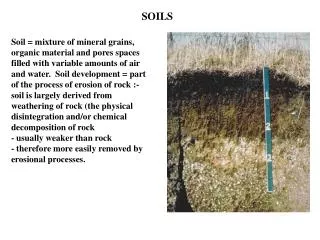
MOLLISOL Deep, Fertile TALL GRASS PRAIRIE
Mollismeans SOFT in Latin, and these soils are RICH, DARK, and SOFT. The taller the grass, the darker the soil. Which state would have darker soil: Colorado, or Illinois? SHORT GRASS PRAIRIE
There are lots of organisms in grasslands: Including wildflowers, clovers, bacteria, fungi, and beetles
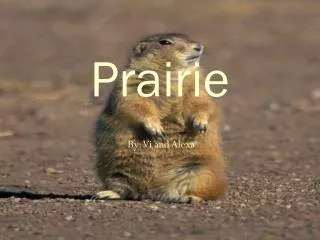
And animals like Prairie Dogs and Bison. Can you name any others?
The prairies vary in relief from flat to having rolling hills
Most of our FOOD is grown here And we need to keep the soils fertile. Cattle produce meat and milk, but how can cattle help with fertility?
…and then spread onto crops. It contains MACRONUTRIENTS like nitrogen, phosphorus, and potassium
Some farmers make their own compost, by recycling manure and mixing it with plants Why are nutrients important again? What happens if there are too many nutrients?
Vocabulary • Productive • Relief • Runoff • Sediment • Slope • Topsoil (A horizon) • CLORPT • Erode (erosion) • Groundwater • Horizon • Organic matter • Organisms • Parent material
Vocabulary • Eolian – Parent materials deposited by wind with more than 5% sand • Prairie – Grasslands that form in climates too dry to be a forest and too moist to be a desert. • Loess – Parent materials deposited by wind with less than 5% sand