Download
1 / 11
110 likes | 201 Vues
Engage in an educational journey through marine ecosystems, such as the biome and the diverse marine life it harbors, from plankton to coral reefs. Learn about ocean temperature zones, the impact of depth and sunlight, and the unique features of intertidal areas. Explore the intersection of land and sea in estuaries where freshwater meets the ocean.

E N D
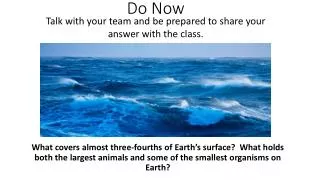
Talk with your team and be prepared to share your answer with the class. Do Now What covers almost three-fourths of Earth’s surface? What holds both the largest animals and some of the smallest organisms on Earth?
Biome –a large area characterized by its climate and the plants and animals that live in the area.
Marine Ecosystems Ecosystems in the Ocean • Plankton • Tiny organisms that float near the surface of the water • Many plankton are producers. • Plankton form the base of the ocean’s food chains.
Ocean Temperature Zones Textbook page 59
RCQ page 59 How does temperature affect marine animals?
Depth and Sunlight Textbook pages 60-61
RCQ page 61 How do animals in the benthic zone get food? Sea Urchins Worms
Coral Reef • Found in warm, shallow areas of the neritic zone • Made up of small animals called coral • Corals live in large groups • Corals die and leave their skeletons behind – and new corals grow on the remains.
Intertidal Areas –Found near the shoresIncludes mudflats, sandy beaches, rocky shores
Estuary an area where fresh water from streams and rivers spills into the ocean