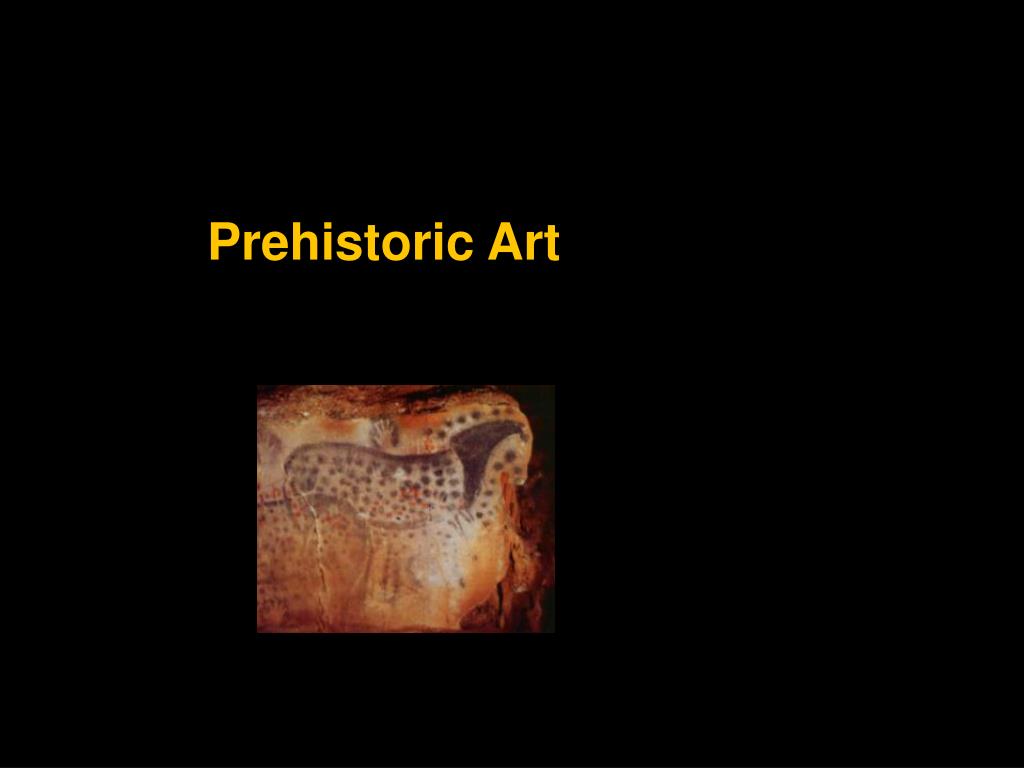
Prehistoric Art. Dating Conventions and Abbreviations B.C.=before Christ B.C.E.=before the Common Era A.D.= Anno Domini (the year of our Lord) C.E.=Common Era c. or ca.= circa C.=century.
Une image / un lien ci-dessous est fourni (tel quel) pour télécharger la présentation
Politique de téléchargement : le contenu du site vous est fourni TEL QUEL pour votre information et votre usage personnel ; il ne peut être vendu, concédé sous licence ni partagé sur d’autres sites sans l’accord de son auteur.Le contenu vous est fourni TEL QUEL, pour votre information et votre usage personnel uniquement.Téléchargez la présentation en cliquant sur ce lien.Lors du téléchargement, si vous ne parvenez pas à télécharger une présentation, l’éditeur a peut-être supprimé le fichier de son serveur.Pendant le téléchargement, si vous ne parvenez pas à obtenir une présentation, le fichier a peut-être été supprimé par l’éditeur.
Dating Conventions and Abbreviations B.C.=before ChristB.C.E.=before the Common Era A.D.=Anno Domini (the year of our Lord)C.E.=Common Era c. or ca.= circa C.=century
Paleolithic Art introduces the student to the “image-making” capability of humankind. Representational images appeared in Asia, Africa and Europe. Mesolithic Art further developed the representational skills which theses early peoples used to describe and define their domain. Human figural representation is regularized into narratives, which identify human activities and concerns. Neolithic people settle into communities, which are fixed in place, and animals and foods stuffs are domesticated. Art becomes an integral component for community living.
Twisted perspective A convention of representation in which part of a figure is shown in profile and another part of the same figure is shown frontally; a composite view.
Around 30,000 BCEhuman beings were thought to have intentionally created works of art Pebble resembling a human face from Makaspansgat South Africa ca. 3,000,000 B.C.E. reddish brown jasperite approximately 2 3/8 in. wide
Incise To cut into a surface with a sharp instrument; a means of decoration, especially on metal and pottery. Human with Feline Head from Hohlenstein-Stadel, Germany ca. 30,000-28,000 B.C.E. mammoth ivory 11 5/8 in. high
Interpretations given to figures • Sorcerers • Magicians wearing masks • Humans dressed up as animals. Human with Feline Head from Hohlenstein-Stadel, Germany ca. 30,000-28,000 B.C.E. mammoth ivory 11 5/8 in. high
The prehistoric peoples may have attributed magical properties to the paintings. Confining animals to the surface of their cave walls, they may have felt they were bringing the animals under their control. Rituals or demons may have been performed in front of them either to aid in hunting or insure survival of the herds. They may have been teaching tools to instruct new hunters or to serve as target practice. Pech-Merle Cave paintings Lot, France ca. 22,000 B.C.E. pigment on stone
Techniques the artists may have used to create thePech-Merle prints Negative prints: The painter placed one hand against the wall and brushed or blew pigment around it. Positive prints: The painter dipped a hand in pigment and then pressed the hand against the wall. • Meaning; • They may have been signatures, either of the individual artist or the artist’s community.
Organization of the bison images from Altamira • They are all in profile to show all parts of the animal. • They seem to float above the viewer’s head and do not share a common ground line or orientation. • They are separate rather than a group. Altamira Cave paintings Santander, Spain ca. 12,000-11,000 B.C.E. pigment on stone
Lascaux Cave paintings Lascaux, Dordogne, France ca. 15,000-13,000 B.C.E. pigment on stone
Were the animals at Lascaux painted at different times? Two different techniques (silhouettes and outlines). The “herd” also consists of several different kinds of animals of various sizes and styles moving in different directions.
Neolithic Art Neolithic art and architecture vocabulary: Lintel • A beam used to span an opening, or a stone in the case of megalith circles. Megalith • Massive rough-cut stones, usually grouped into circles or “henges.” Terracotta • Hand-baked clay used for sculpture and as a building material. It may be glazed or painted.
ÇatalHöyükis best known for its wall paintings and shrines Deer Hunt detail of a wall painting from Level III ÇatalHöyük, Turkey ca. 5,750 B.C.E. • Two subjects that were portrayed in the paintings at ÇatalHöyük were a hunting party and a landscape. • The technique; • Pigments were applied with a brush to a white background of dry plaster.
Three changes in artistic production that paralleled the shift from a food-gathering to a food-producing society. • Paintings are made on walls of permanent houses, not in caves. • The first known landscape, showing a village. • The Tower of Jericho, the beginning of monumental architecture.
Stonehenge was thought to have been erected in several phases in centuries before and after 2000 BCE. • It was probably an astronomical observatory as it is an accurate solar calendar. Stonehenge Salisury Plain, Wiltshire, England ca. 2,550-1,600 B.C.E.sarsen and bluestone