DIGESTIVE SYSTEM .
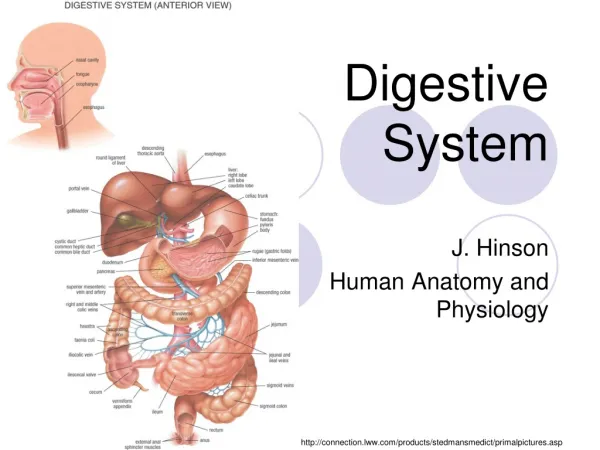
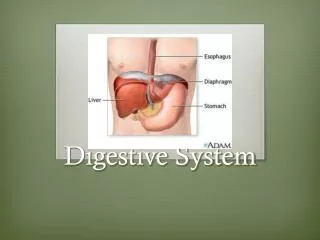
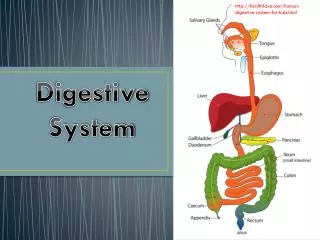
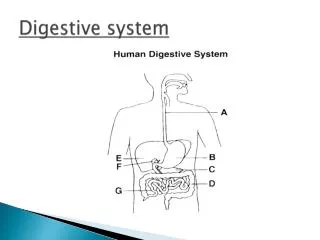
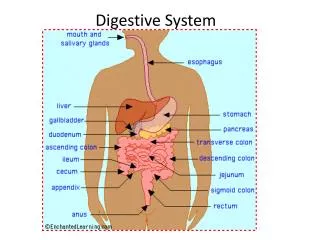
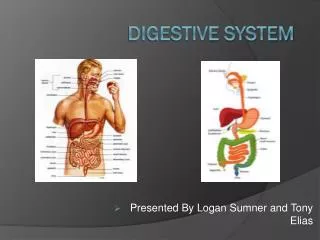
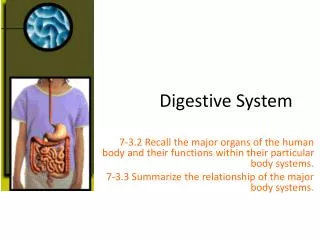
The digestive system is a complex network that processes food from ingestion to excretion. It begins in the mouth, where food is broken down, then travels through the esophagus to the stomach. Here, it transforms into a semi-liquid mixture called chyme. The small intestine, the largest component, comprises the duodenum, jejunum, and ileum, absorbing nutrients. Remaining waste progresses to the large intestine, with organs like the liver and pancreas playing crucial roles in processing and digestion. Understanding these components is vital for health.

DIGESTIVE SYSTEM .
E N D
Presentation Transcript
DIGESTIVE SYSTEM. BY : JUAN DELGADO
MOUTH THE POETIC (AND BIBLICAL) VIEW OF THE MOUTH AND LIPS IS ALMOST ENTIELY ROMANTIC AND IDEALIZED. • http://www.encyclopedia.com/topic/mouth.aspx.
THE ESOPHAGUS http://alaskadigestivecenter.com/the_esophagus.aspx THE ESOPHAGUS IS A TUBE THAT CONNECTS THE MOUTH AREA TO THE STOMACH.
STOMACH http://library.thinkquest.org/4245/stomach.htm THE food leaves the stomach as a semi liquid material called chyme.
Small intestine • THE small intestine is the largest part of the gastrointestinal tract and is composed of the duodenum wich is about one foot long the jejunum (5-8 feet long) and the iteum (16-20 feet long). http://www.becomehealthynow.com/article/bodydigestive/730
LARGE INTESTINE • THE large intestine ( or large bowel) is the last part of the digestive system in vertebrate animals. http://www.bing.com/search?q=LARGE+intestine&form=MS8TDF&pc=MS8TDF&src=IE-SearchBox&ibss=1
LIVER • THE LIVER SUPPORTS ALMOST EVERY ORGAN IN THE BODY AND IS VITAL FOR SUTVIVAL. • http://en.wikipedia.org/wiki/Liver
APPENDIX • THE APPENDIX SITS AT THE JUCTION OF THE SMALL INTESTINE AND • LAGE INTESTINE. http://www.webmd.com/digestive-disorders/picture-of-the-appendix
PANCREAS THE PANCREAS IS ABOUT 6 INCHES LONG AND SITS ACROSS THE BACK OF THE ABDOMEN BEHIND THE STOMACH.
GALL BLADDER • http://en.wikipedia.org/wiki/Gallbladder THE GALLBALDDER IS A HOLLOW JUST BENEATH THE LIVER.
ENZYMES • http://en.wikipedia.org/wiki/Enzyme ENZYMES ARE LARGE BIOLOGICAL MOLECLES RESPONSIBLE FOR THE THOUSANDS OF CHEMICAL INTERCONVERSIONS THAT SUSTAIN LIFE.
BILE / BILE DUCT • http://www.nlm.nih.gov/medlineplus/ency/article/002237.htm BILE IS A FLUID THAT IS MADE AND RELEASED BY THE LIVER AND STORED IN THE GALLBLADDER.
BIBLIOGRAPY http://www.becomehealthynow.com/article/bodydigestive/730 http://library.thinkquest.org/4245/stomach.htm • http://en.wikipedia.org/wiki/Gallbladder http://www.webmd.com/digestive-disorders/pihttp://en.wikipedia.org/wiki/Gallbladdercture-of-the-pancreas http://www.nlm.nih.gov/medlineplus/ency/article/002237.htm http://www.encyclopedia.com/topic/mouth.aspx http://en.wikipedia.org/wiki/Liver http://www.webmd.com/digestive-disorders/picture-of-the-appendix