Lesson 33:One pager
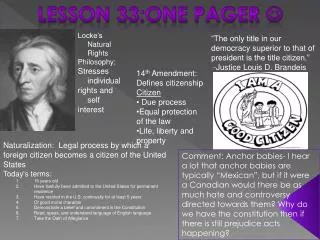
This lesson explores Locke's Natural Rights philosophy, emphasizing individual rights and self-interest. Justice Louis D. Brandeis famously stated, "The only title in our democracy superior to that of president is the title citizen," underlining the importance of citizenship. We delve into the 14th Amendment's definition of citizenship, due process, and equal protection under the law. The process of naturalization is examined, highlighting requirements such as age, residency, moral character, English proficiency, and allegiance. The lesson also addresses contemporary issues surrounding immigration and prejudice.

Lesson 33:One pager
E N D
Presentation Transcript
Lesson 33:One pager Locke’s Natural Rights Philosophy; Stresses individual rights and self interest “The only title in our democracy superior to that of president is the title citizen.” -Justice Louis D. Brandeis • 14th Amendment: Defines citizenship • Citizen • Due process • Equal protection of the law • Life, liberty and property • Naturalization: Legal process by which a foreign citizen becomes a citizen of the United States • Today's terms: • 18 years old • Have lawfully been admitted to the United States for permanent residence • Have resided in the U.S. continually for at least 5 years • Of good moral character • Demonstrate a belief and commitment in the Constitution • Read, speak, and understand language of English language • Take the Oath of Allegiance Comment: Anchor babies- I hear a lot that anchor babies are typically “Mexican”, but if it were a Canadian would there be as much hate and controversy directed towards them? Why do we have the constitution then if there is still prejudice acts happening?