Architectural Evolution of Japanese Palaces and Shrines: Heian to Muromachi Periods
20 likes | 153 Vues
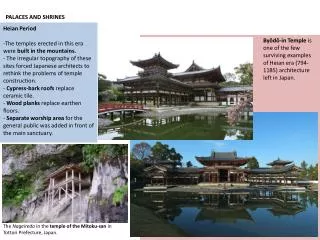
This overview explores the architectural developments of Japanese palaces and shrines from the Heian to the Muromachi periods. During the Heian period (794-1185), temples were creatively designed to adapt to mountainous terrains, featuring cypress-bark roofs and dedicated worship areas for the public. Notable examples include Byōdō-in Temple and the Nageiredo at Mitoku-san. The subsequent Kamakura (1185-1333) and Muromachi (1336-1573) periods saw the emergence of the Daibutsu-style architecture, influenced by the Song Dynasty, exemplified by the Nandaimon at Tōdai-ji and the Amida Hall at Jōdo-ji, showcasing a blend of Japanese and Chinese styles.


Architectural Evolution of Japanese Palaces and Shrines: Heian to Muromachi Periods
E N D
Presentation Transcript
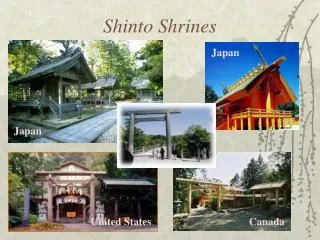
PALACES AND SHRINES • Heian Period • The temples erected in this era were built in the mountains. • The irregular topography of these sites forced Japanese architects to rethink the problems of temple construction. • Cypress-bark roofs replace ceramic tile. • Wood planks replace earthen floors. • Separate worship area for the general public was added in front of the main sanctuary. Byōdō-in Temple is one of the few surviving examples of Heian era (794-1185) architecture left in Japan. The Nageiredo in the temple of the Mitoku-san in Tottori Prefecture, Japan.
PALACES AND SHRINES Kamakura Period (1185-1333) Muromachi Period (1336-1573) • Japanese architecture with influence of the Chinese style are developed into 2 categories: • Daibutsu-Style • Zen-Style • DAIBUTSUYŌ/ DAIBUTSU STYLE (Great Buddha Style) • Japanese religious architectural style • emerged in the late 12th or early 13th century. • based on Song Dynasty architecture and was the antithesis of the simple and traditional wayō style. • The Nandaimon at Tōdai-ji and the Amida Hall at Jōdo-ji are the only extant examples of this style. The existing Nandaimon (Great South Gate) is a reconstruction of end-12th century based on Song Dynasty style. Jododo of Jōdo-ji in Ono, Hyogo prefecture. This architecture in Daibutsu style that is combining design of Japan and China. It was built in 1194.