Download
1 / 14
140 likes | 266 Vues
Join Janice Fleming at the Clarion Hotel, IFSC, on May 10, 2010, for an insightful session on successfully managing your business. This workshop will cover classic management failures such as indecision, procrastination, and poor communication, alongside effective management strategies. Discover key tips for success like decisiveness, planning, and delegation to avoid common pitfalls. Learn the essential procedures employed by successful businesses, including financial planning, budget preparation, and performance measurement. Enhance your management skills to ensure your business thrives.

E N D
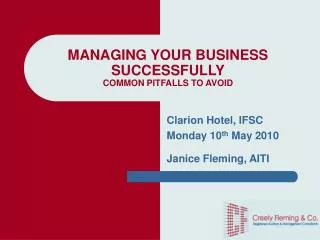
MANAGING YOUR BUSINESS SUCCESSFULLYCOMMON PITFALLS TO AVOID Clarion Hotel, IFSC Monday 10th May 2010 Janice Fleming, AITI
OVERVIEW • Introduction • Part 1 • Classic management failures • Tips for successful business management • Part 2 • Procedures employed by businesses that are successful
CLASSIC MANAGEMENT FAILURES • Indecision • Procrastination • Re-inventing the wheel • Resistance to change • Poor / no planning
CLASSIC MANAGEMENT FAILURESCONTD. • Reluctance to delegate • Inability to recognise weaknesses • Poor communication skills • Poor time management • Poor interpersonal skills
TIPS FOR SUCCESSFUL BUSINESS MANAGEMENT • Be decisive • Don’t put things off • Accept tried and trusted procedures • Be open to change • Plan, plan, plan
TIPS FOR SUCCESSFUL BUSINESS MANAGEMENT CONTD. • Delegate • Honest appraisal of strengths and weaknesses • Improve communication skills • Time management • Interpersonal skills
PROCEDURES EMPLOYED BY SUCCESSFUL BUSINESSES • Financial / business planning • Preparing budgets • Reassess regularly • Systems & procedures • Clear pricing policy • Costs controls • Cash collection • Staff training & development • Accounting records
PROCEDURES EMPLOYED BY SUCCESSFUL BUSINESSES CONTD. • Financial reporting • Management accounts • Performance measurement / KPI’s • Marketing strategy • Know your market • Effective marketing for your business sector
PROCEDURES EMPLOYED BY SUCCESSFUL BUSINESSES CONTD. • Managing Cash Flow • Cash flow forecasts • Control personal spending • Review tax situation