

SlideServe
Menu
Préférences
© SlideServe · v2026

The Pond

nevina avatar
12 diapositives · 752 Views · Sep 29, 2014

The Pond. By Rachel, Lauren, Bly and William. Dragonflies. Young dragonflies eat water insects. Dragonflies have a wingspan of 3 to 5 inches long. Dragonflies sometimes eat each other. Life cycle of a dragonfly. Food chain of a Dragonfly. Ducks.
The Pond - slide 1
01 / 12The Pond
1 / 17

Télécharger la présentation

The Pond
Une image / un lien ci-dessous est fourni (tel quel) pour télécharger la présentation

Politique de téléchargement : le contenu du site vous est fourni TEL QUEL pour votre information et votre usage personnel ; il ne peut être vendu, concédé sous licence ni partagé sur d’autres sites sans l’accord de son auteur.Le contenu vous est fourni TEL QUEL, pour votre information et votre usage personnel uniquement. Téléchargez la présentation en cliquant sur ce lien. Lors du téléchargement, si vous ne parvenez pas à télécharger une présentation, l’éditeur a peut-être supprimé le fichier de son serveur.Pendant le téléchargement, si vous ne parvenez pas à obtenir une présentation, le fichier a peut-être été supprimé par l’éditeur.

F I N

Plus de contenu associé

Transcription de la présentation
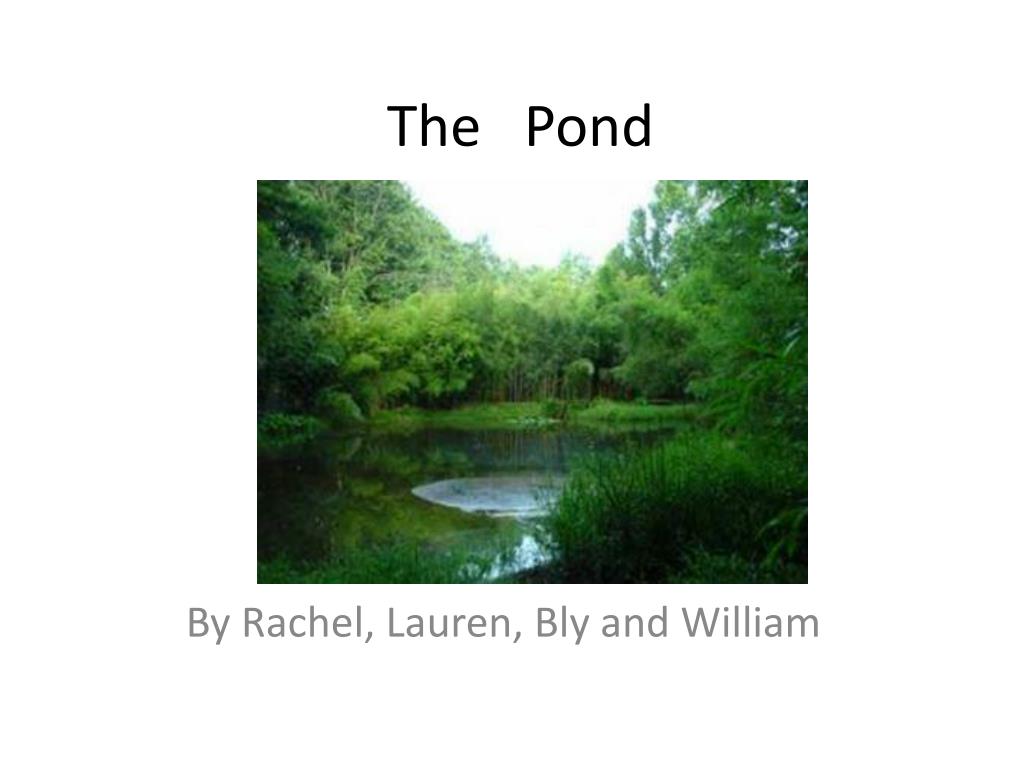
  1. The Pond By Rachel, Lauren, Bly and William

  2. Dragonflies • Young dragonflies eat water insects. • Dragonflies have a wingspan of 3 to 5 inches long. • Dragonflies sometimes eat each other.

  3. Life cycle of a dragonfly

  4. Food chain of a Dragonfly

  5. Ducks • Duck’s basic needs are food, water and air • Adaptations- a duck has webbed feet to help it swim. It also has oil on it to keep it from getting wet

  6. Ducks’ Behaviors Ducks say quack to communicate with each other

  7. Snapping turtles • The basic needs of a snapping turtle include bugs, frogs, salamanders, and sometimes even small winter birds. • Snapping turtles live in North America. • Turtle’s shells help protect them from predators. • Turtles hibernate in the winter by swimming to the bottom of the pond and covering themselves in mud.

  8. Life cycle of the turtle

  9. Cattails • Cattails have fuzzy brown fruit. • Cattails can reach up to 3 to 10 feet long • Cattails can grow faster than crops on the field

  10. Cattails • Cattails are also called ‘Club Rush’ • Cattails go dormant for the winter • Basic needs of a cattail are soil, water and nutrients from the soil

  11. Parts of a Cattail

  12. Life cycle of a cattail • Starts out as a seed • It starts to make a stem • It makes leaves • Last, it makes a flower