Understanding Sickle Cell Anemia: Causes, Symptoms, and Genetic Implications
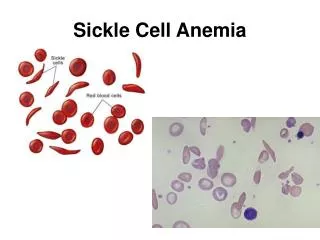
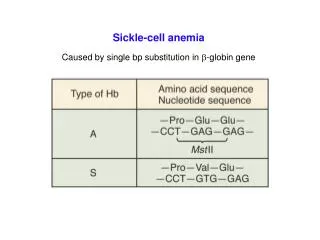
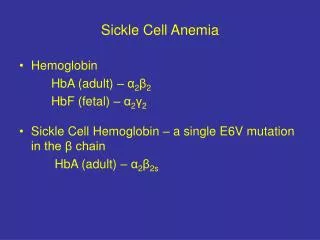
Sickle Cell Anemia is a genetic blood disorder caused by an abnormal form of hemoglobin, affecting oxygen transport in the body. Symptoms include skin paleness, weakness, shortness of breath, and heart failure. Genetics play a crucial role, with both carriers at risk of passing the condition to their offspring. This guide explains the inheritance of sickle cell alleles using Punnett squares, highlighting genotype and phenotype probabilities. It provides insights for students to practice genetic concepts and understand the implications of sickle cell traits in families.

Understanding Sickle Cell Anemia: Causes, Symptoms, and Genetic Implications
E N D
Presentation Transcript
Sickle Cell Anemia Chisom Amaefuna Adeline Laurente 1/29/10 Period 2
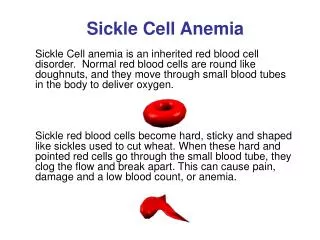
Summary Sickle Cell Anemia is a Genetic Blood DISEASE DUE TO A Abnormal form of a Hemoglobin. Hemoglobin is the molecule in the red Blood cell that transports Oxygen from lungs to the farthest parts of the body Symptoms of Sickle Cell Anemia include: Paleness of the Skin Weakness Shortness of Breath Heart Failure Fact: Couples who are both carriers can