Understanding the Digestive System: Process, Functions, and Key Components
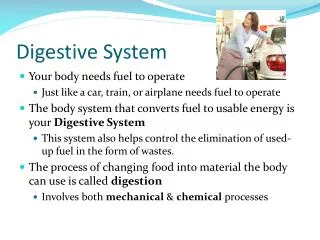
The digestive system plays a crucial role in preparing food for use by the body through mechanical and chemical digestion. It begins in the mouth, where food is broken down physically and chemically, and continues through the esophagus, stomach, and intestines. Enzymes and digestive juices help break down carbohydrates, proteins, and fats, while also absorbing necessary nutrients and filtering out waste. This guide explores each part of the digestive tract and its specific functions, helping you understand how your body processes food.

Understanding the Digestive System: Process, Functions, and Key Components
E N D
Presentation Transcript
Digestive system By: Juliana Marulanda
What is it? • The Digestive system prepares food for use by all body use .
Digestion • The Chemical Break down of biological molecules into there compose part.
function • Produces various chemical to break down the food • Filters out of harmful substances . • Get rid of wastes
Digestion1 • Mechanical Digestion: • The physical braking apart of food.( changes form of food ) • chew • tear • Mash • mix
Digestion2 • Chemical Digestion: • when chemicals called Enzymes breaks up the food you eat so you can digested or your digestive system can absorb.
Digestions • Both kinds of digestion occur in your mouth. • Cuing mechanically breaks food apart wail an enzyme in your spit called Salivary Amylase breaks up carbohydrates • When you chew the food softens and the tong push it to the opening of your Esophagus ( back of your mouth) the esophagus squishes the food down though the stomach your stomach. • In your stomach food is turned and mixed with enzymes and other digestive juices ( like hydro chloric gases) • This Chemicals break down protein and fats .
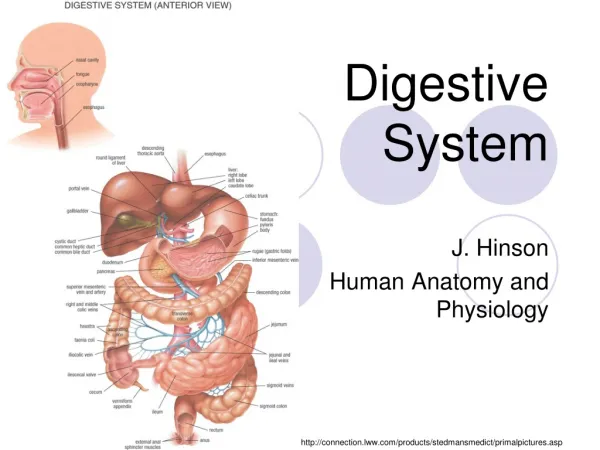
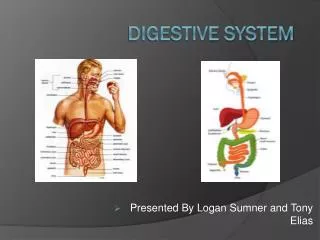
The digestion tract • a long muscular tube with many sections and areas • Begins with the mouth and ends with the anus
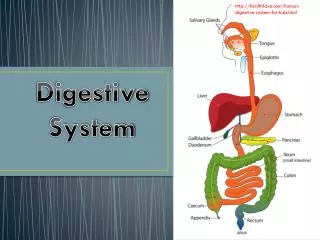
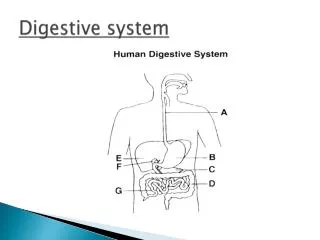
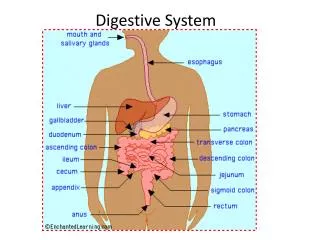
Parts of the digestive tract • Mouth • Pharynx • Esophagus • Stomach • Small Intestine • Large Intestine
Louth • Mixes and rolls the food into tiny mashed bits • Pushes the little pits toward the Pharynx and into the esophagus when swallowing
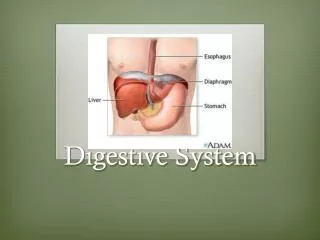
Esophagus • A straight muscular tube that is about 10 inches long which connects the mouth with the stomach • Food takes about 4 to 8 seconds as it passes through to the stomach • They have a wall that moves liquids and foo safely and smoothly down(Peristalsis)
Stomach • J shaped muscular sac • Foods is mixed with gastric juices ( hydrochloric and enzymes) secreted from the stomach wall
Small intestine • Long (20 ft.) coiled tube beneath the stomach • It take hours to complete the journey • Absorbs martials cross the mucosa into the blood then other parts of the body for storage or further chemical changes
Small intestine • Has three parts: • Duodenum: upper part about 10 in connects to the stomach . Where the digestive juices from the pancreas and liver combine with chime making it thin and watery • Jejunum: about 8 ft. • Ileum: about 12 ft.
Large intestine • Large dimer, but shorter ( 5 ft.) • Water is absorb from the undigested food making the waste harder until it becomes solid • Waste stays 1-12 hours • Waste is pushed into the expanded portion (rectum) of the large intestine • Solid waste stays in the rectum until it is excreted though the anus as feces • Appendix hangs on the right side of the large intestine
Path of digestion • Mouth • Pharynx • Esophagus • Stomach • Small intestine • Large intestine • Anus
Bibliography • http://humanbodycng7.wikispaces.com/3.+Digestive+System • http://www.brainpop.com/health/bodysystems/digestivesystem/preview.weml • http://digestive.niddk.nih.gov/ddiseases/pubs/yrdd/ • http://kidshealth.org/parent/general/body_basics/digestive.html • http://www.yakult.com.au/resources/flash/flash_digestiveDD100.html