Protecting Endangered Falcons: Understanding the Threats They Face
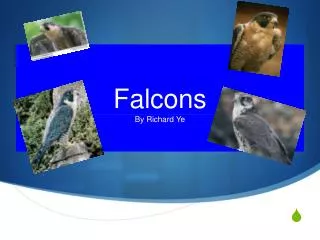
Falcons are fascinating birds but are endangered due to several human-induced factors. The pesticide DDT, while banned in the U.S. since 1972, continues to harm falcon populations in South America, weakening eggshells and leading to high chick mortality. Habitat destruction from pollution and urban development further threatens their survival. Additionally, historical practices during World War II resulted in the unnecessary deaths of falcons. It's vital for us to take action: prohibit shooting falcons, limit construction, and advocate for a global ban on DDT.

Protecting Endangered Falcons: Understanding the Threats They Face
E N D
Presentation Transcript
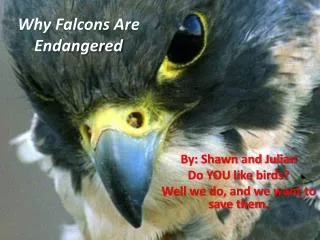
Why Falcons Are Endangered By: Shawn and Julian Do YOU like birds? Well we do, and we want to save them.
DDT DDT actually stands for dichlorodiphenyl trichloroethane. When DDT is sprayed on crops to kill bugs, birds eat the bugs, and falcons eat the smaller birds. DDT is passed to falcons through the food chain. When the female gets this chemical in her system and lays an egg, the egg does not have the carbon calcium it needs to form a strong shell. The weak shell causes the new eyas to overheat and die. Thankfully this chemical was banned in the U.S. in 1972, but is still used in South America where falcons migrate to in the winter.
Habitat Problems Falcons’ natural habitat is the forest and mountains. From all the pollution we make, and all the buildings we build, the falcons die off.
Human Overkill During World War II, the people fighting found a way to carry messages. They used Carrier Pigeons that carried pieces of paper to allies, but falcons ate the pigeons. The ally that saw the falcon eating the pigeon, shot, and killed the falcon. He would then go and retrieve and read the paper. Sadly, the falcon lost its life.
Falcons Depend on Us! These falcons need our help and we need to help them! Three things humans can do: 1. Never shoot a falcon. 2. Do not build too many buildings. 3. Ban DDT throughout the world.
Resources • Peregrine Falcons by Doug Wechsler • http://library.thinkquest.endangeredfalcons