Understanding the Respiratory System: Anatomy, Function, and Health Implications
130 likes | 247 Vues
Explore the intricate details of the respiratory system, including its functional anatomy and key structures essential for gas exchange between the lungs and the environment. Learn about the mechanics of breathing, the critical roles played by air pressure, the diaphragm, intercostal muscles, and the lungs. This overview discusses the health benefits of nasal breathing, the importance of mucosal lining and olfactory receptors, and common conditions like rhinitis and sinusitis. Delve into the components of the pharynx, larynx, and lungs while understanding how we defend against pathogens and the implications of conditions like pleurisy, bronchitis, and emphysema.


Understanding the Respiratory System: Anatomy, Function, and Health Implications
E N D
Presentation Transcript
Respiratory System Functional Anatomy
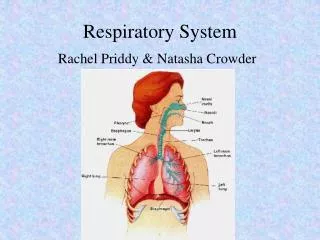
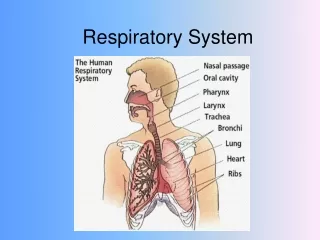
Structures to Know How does gas exchange occur between the lungs and the surrounding environment?
Mechanics Of Breathing:Explain the role of:Air Pressure, Diaphragm, Intercostal Muscles,Lungs
Why is nose Breathing healthier than mouth breathing? Mucosa lining, olfactory receptors, network of veins, nasal hair
Palate: hard and soft What is a cleft Palate? What is rhinitis? What is Sinusitis?
Pharynx: The throat Tonsillitis Tonsillectomy
Larynx: Voice Box - Speech Epiglottis - Esophagus- Trachea- “Adam’s Apple”- True Vocal cords
How do we keep Pathogens out of our Lungs? • Cilia Mucosa: moves from the lungs up the respiratory tract and into stomach or out of the body
Lungs: Site of Gas exchange Right vs Left Lung- Location of Base of Lungs and heart What is Pleurisy?