The Struggles of the South: Manpower, Economy, and Military Tensions in Early 1862
In early 1862, the Confederacy faced severe challenges due to a lack of manpower and resources. General Lee's draft mandated military service for white men aged 18 to 35, extending up to 50 as losses mounted. The South's economy suffered, exacerbated by local authority resistance to government taxation and a crippled infrastructure. Internationally, the South struggled for recognition, while tensions with Great Britain escalated after ship captures. Despite adversity, African Americans enlisted in the Union army, marking a significant shift in wartime dynamics.

The Struggles of the South: Manpower, Economy, and Military Tensions in Early 1862
E N D
Presentation Transcript
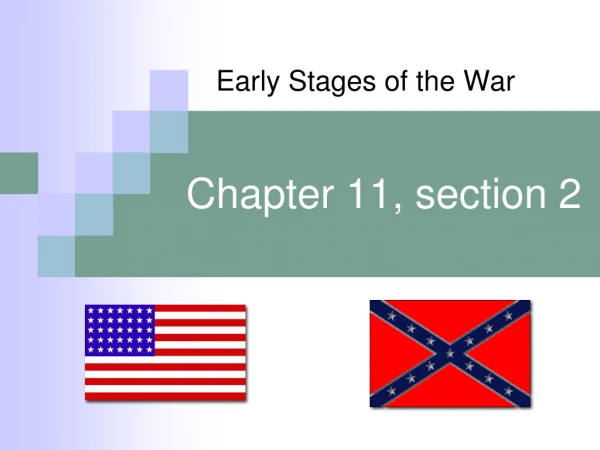
Chapter 11 Section 2 Early 1862- “picnic” over??? South- lack of manpower
Chapter 11 Section 2 • Powers- South- similar to the North • States’ rights and slavery • Common good • South- fewer resources • General Lee- draft- required military service • 3 years- military- white men- 18 to 35 • Upped to 45 and 50 • Gov’t- charge of South’s economy • Tax- personal incomes • Local authorities refused to cooperate
Chapter 11 Section 2 • Confederacy- no recognition- Europe • Alabama- captured 60 Northern merchant ships • 1862- Napoleon III- ruler of France • Sent troops- Mexico • British- wait and see
Chapter 11 Section 2 • Tensions between Great Britain and the US • John Slidell, James Mason- ship Trent- Europe • Captured • British gov’t- troops to Canada • One war at a time- Lincoln • Lincoln- $19 million • Congress- Pacific Railroad Act- NE to Pacific • Homestead Act- free gov’t land • Raise tariff rates
Chapter 11 Section 2 • Federal income tax- US history • Internal Revenue Act- liquor, tobacco, medicine, newspaper ads • National currency- greenbacks • North- draft • Democrats- Copperheads- against the war • Freed slaves- jobs away from the whites
Chapter 11 Section 2 • Border states- slave states- Union • DE, MD, MO, KY • “Disloyal” members- MD- arrested • KY, MO- control- Mississippi • KY- martial law- emergency rule- military authorities • Writ of habeas corpus suspended • Legal protection- court determination- lawful imprisonment
Chapter 11 Section 2 • Republican Party- Radical Republicans- punish- CSA • Lincoln opposed slavery • No legal authority- abolish it • January 1, 1863- Emancipation Proclamation • No clout • Lee defeated- Antietam • France and England- no interference
Chapter 11 Section 2 • African Americans- join the Union army • Union general Benjamin Butler • Free slaves • Contraband- captured items • Let the slaves go • 1865- 180,000 African Americans- Union army • July 1863- Fort Wagner, Charleston, SC • 54th Massachusetts Infantry • Colonel Robert Gould Shaw • Sergeant William Carney- first African American- Congressional Medal of Honor
Chapter 11 Section 2 • Depletion- South’s labor force • North- greater numerical advantages • Food shortage- South • Union blockade- surplus cotton • Food riots erupted • Labor shortage, lack of goods- inflation • Profiteers- huge amount of money
Chapter 11 Section 2 • North- farms and factories • Samuel Colt- guns for the army • Prison Camps • North- Point Lookout- MD, Camp Chase- OH • South- Andersonville- GA, Richmond- Libby Prison
Chapter 11 Section 2 • Medical care quite poor • Diseases rampant- mumps, measles • Malaria, pneumonia, nutritional foods lacking • Clara Barton- “angel of the battlefield” • American Red Cross • Dorothea Dix- nursing corps • US Sanitary Commission created