Download

1 / 15
150 likes | 253 Vues
This presentation provides a comprehensive overview of the circulatory system, detailing its essential components including the heart, blood vessels, and blood. The heart, roughly the size of a fist, pumps blood to transport nutrients, oxygen, and waste products throughout the body. It highlights the different types of blood vessels and their functions. Additionally, common diseases impacting the circulatory system such as angina, arrhythmia, and hypertension are discussed, alongside the interplay with the nervous and respiratory systems. Fascinating facts about heartbeats and blood cell production are also included.

E N D
Circulatory System Power point By: Elizabeth Sanders
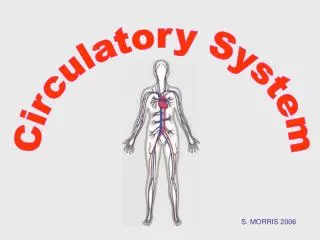
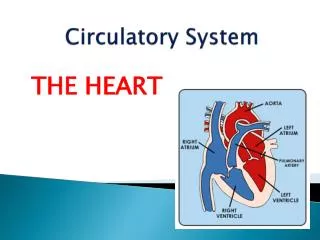
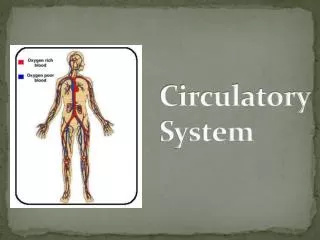
Parts of the Circulatory System • Heart- size of your fist, located in the center of your chest slightly to the left. Pumps blood and keeps blood moving throughout the body. • Blood- carries nutrients, water, oxygen, and waste products through your body. A young person has about one gallon of blood in their body; an adult has about five quarts of blood in their body.
Parts of the Circulatory System • Blood Vessels- three different types: red, white, and platelets. Red carry oxygen to and carbon dioxide. White help fight off germs. Platelets are cells that help stop bleeding.
Circulatory System • Maintains transportation and coding of the body. • Diseases in the Circulatory System: • Angina- severe chest pains • Arrhythmia- where the heart beats with an irregular or abnormal rhythm • Hypertension- abnormally high blood pressure
What systems it works with • The Nervous System- sends impulses to make the heart beat. • The Respiratory System- brings oxygen to the lungs.
Other Facts • 1.) The heart beats around three billion times an average person’s life. • 2.) Eight million blood cells die in the human body every second, and the same number are born each second. • 3.) With each drop of blood, there are five million red blood cells.
Pictures http://www.google.com/imgres?q=circulatory+system
Pictures • http://www.google.com/imgres?q=blood+vessel
Pictures http://www.google.com/imgres?q=heart&um=
Pictures • http://www.starsandseas.com/SAS%20Physiology/Cardiovascular/Cardiovascular.htm
Pictures • http://www.google.com/imgres?q=human+lungs&um=1&hl=en&
Pictures http://www.google.com/imgres?q=H+heart&um=1&hl=en&client=safari&sa=N&rls=en&authuser
Pictures • http://www.google.com/imgres?q=artery+picture&um=1&hl=en&client=safari&sa=N&rls=en&authuser=0&biw=1024&bih=996&tbm=isch&tbnid=qcSMHWSjNKF02M:&imgrefurl=http:
Pictures http://www.google.com/imgres?imgurl=http://www.teachpe.com/anatomy/artery.jpg&imgrefurl=http://www.teachpe.com/anatomy/arteries.php&h=313&w=350&sz=20&tbnid=7bAGYhqwjwV_ZM:&tbnh=88&tbnw=98&prev=/search%3Fq%3Dartery%2Bpicture%26tbm
Bibliography * http://wiki.answers.com/Q/How_big_is_a_human_lung *http://answers.ask.com/Health/Other/how_big_is_the_human_heart *http://www.google.com/imgres?imgurl=http://library.thinkquest.org/5777/images/circulatory. *http://www.starsandseas.com/SAS%20Physiology/Cardiovascular .htm *http://www.google.com/imgres?q=blood+vessel *http://www.google.com/imgres?q=human+lungs&um=1&hl=en& *http://www.google.com/imgres?q= * +heart&um=1&hl=en&client=safari&sa=N&rls=en&authuser *http://www.google.com/imgres?q=artery+picture&um=1&hl=en&client=safari&sa=N&rls=en&authuser=0&biw=1024&bih=996&tbm=isch&tbnid=qcSMHWSjNKF02M:&imgrefurl=http://en.wikipedia.org/wiki/Common_carotid_artery&docid=8atP6xK_kzc-yM&imgurl=http:// *http://www.google.com/imgres?imgurl=http://www.teachpe.com/anatomy/artery.jpg&imgrefurl=http://www.teachpe.com/anatomy/arteries.php&h=313&w=350&sz=20&tbnid=7bAGYhqwjwV_ZM:&tbnh=88&tbnw=98&prev=/search%3Fq%3Dartery%2Bpicture%26tbm