Download

1 / 26
270 likes | 437 Vues
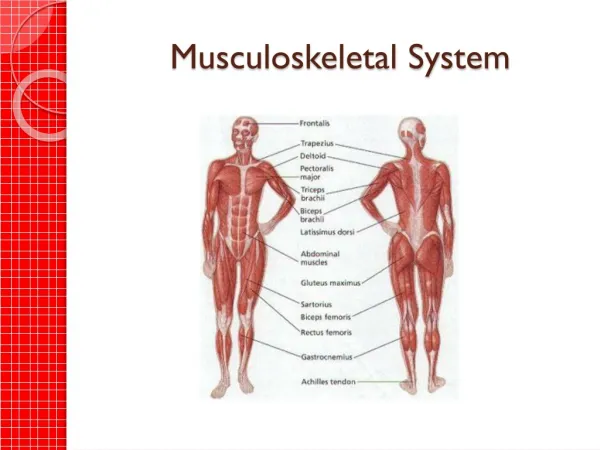
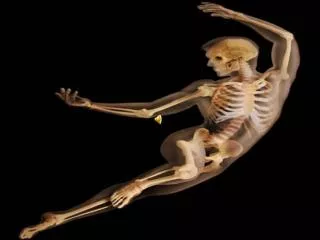
This resource provides an in-depth overview of the motor-musculoskeletal system, focusing on its structures, such as bones, muscles, joints, tendons, ligaments, cartilage, and bursae. It outlines the functions of these components, types of joints, movements, and potential problems associated with aging, like osteoporosis. Emphasizing the importance of assessments, the document highlights a case study of Maria O'Malley, detailing her symptoms, history, and physical assessment methods. This guide is essential for healthcare professionals for optimal patient care and prevention strategies.

E N D
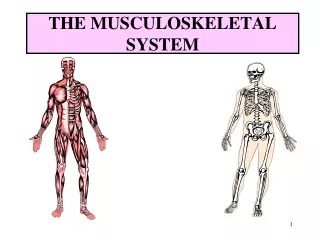
Structures • Bones Muscles • Joints Tendons • Ligaments Cartilage • Bursae
Functions Bones (206): Structure; protection; act as levers; produce blood cells; store calcium Muscles (650): Allow for movement and position; produce heat (Continued)
Functions Joints: Point of articulation of two bones; provide ROM Tendons: Connect muscle to bone Ligament: Connects bone to bone (Continued)
Functions Cartilage: Supports and shapes; acts as a shock absorber Bursae: Sacs filled with synovial fluid; cushion and reduce friction between joints
Types Of Joints • Pivot • Hinge • Condyloid • Plane/gliding • Ball and socket • Saddle
Movements • Extension Flexion Hyperextension • Abduction Adduction Circumduction • Internal rotation External rotation • Pronation Supination • Protraction Retraction • Depression Elevation • Opposition Reposition • Inversion Eversion • Ulnar deviation Radial deviation
Ulnar Deviation: a progressive malformation of the joints at the bottom of the fingers. The knuckles begin to become malformed and tend to make the fingers shift toward the outside of the hand, toward the pinkie. Often seen in patients with rheumatoid arthritis. Radial Deviation: malformation in other direction “club hand”
Relationship to Other Systems Genitourinary • Lymphatic Neurological • Cardiovascular Endocrine • Hematological Gastrointestinal • Integumentary Respiratory
DevelopmentalVariations • Older Adults • Osteopenia • Osteoporosis • Kyphosis • Atrophy
Cultural Variations New text: 694 Old text: Pg 597 • African Americans • Asians • Native Americans • Whites
Maria O’Malley, 68-year-old, widow, parish housekeeper Post-menopausal Concerned about osteoporosis; feel she is “shrinking” “Aching joints in evening after working all day” for several years Case Study
SymptomsWhat symptoms would signal a problem with the musculoskeletal system? • Pain • Weakness • Stiffness • Balance and coordination problems • Other related symptoms
Pertinent History Findings • Aching joints after working all day for past several years; back and neck • Some relief with OTC analgesics • + HTN treated with Zestril • + Fractured wrist r/t fall; 2 adult children; hysterectomy at age 35 • + Family history of HTN & osteoporosis (Continued)
Pertinent History Findings • Yearly physical exam; B/P checked every 3 months; hasn’t had gynecological exam since hysterectomy • No formal exercise program • Lives alone; children, sister, and friends are supports • Polish; Catholic; Medicare/Medicaid
Physical Assessment Approach: inspection, palpation, percussion Position: Standing, sitting, supine Tools: tape measure, goniometer General Survey and head-to-toe scan
Inspection Posture: head position, alignment Normal spinal curves: cervical, thoracic, lumbar, sacral, Spinal deformities: kyphosis, scoliosis, lordosis Gait: phase, cadence, arm swing, toeing, base of support, stride length
Cerebellar Function Balance: • Gait • Tandem walk (heel to toe) • Toe and heel walking • Deep knee bend • Hop on one foot • Romberg Test (Continued)
Cerebellar Function Coordination: • Rapid alternating movements • Finger thumb opposition • Toe tapping • Heel down shin Accuracy of movements: • Finger to nose • Point to point localization
Abnormal Gaits Propulsive Scissors Spastic Stepping Waddling
Palpation Muscle tone:upper and lower extremities Muscle strength: upper & lower extremities • Hand grips • Foot push/leg raise • Grade strength 0 to 5
Joint Assessment For all joints note: • ROM Redness • Condition of skin Warmth • Deformity Stability • Swelling Pain • Crepitus
Pertinent Physical Findings • 1 1/2 inch loss since menopause • Mild kyphosis • Mild atrophy in quadriceps • Full ROM joints, muscle strength +5/5 • + S4
What actual or potential problems can you identify for Mrs.O’Malley? Nursing Diagnosis