
SlideServe
Menu
Préférences
© SlideServe · v2026

Maya, Aztec and Inca Civilizations

omer avatar
17 diapositives · 4K Views · Jul 31, 2012

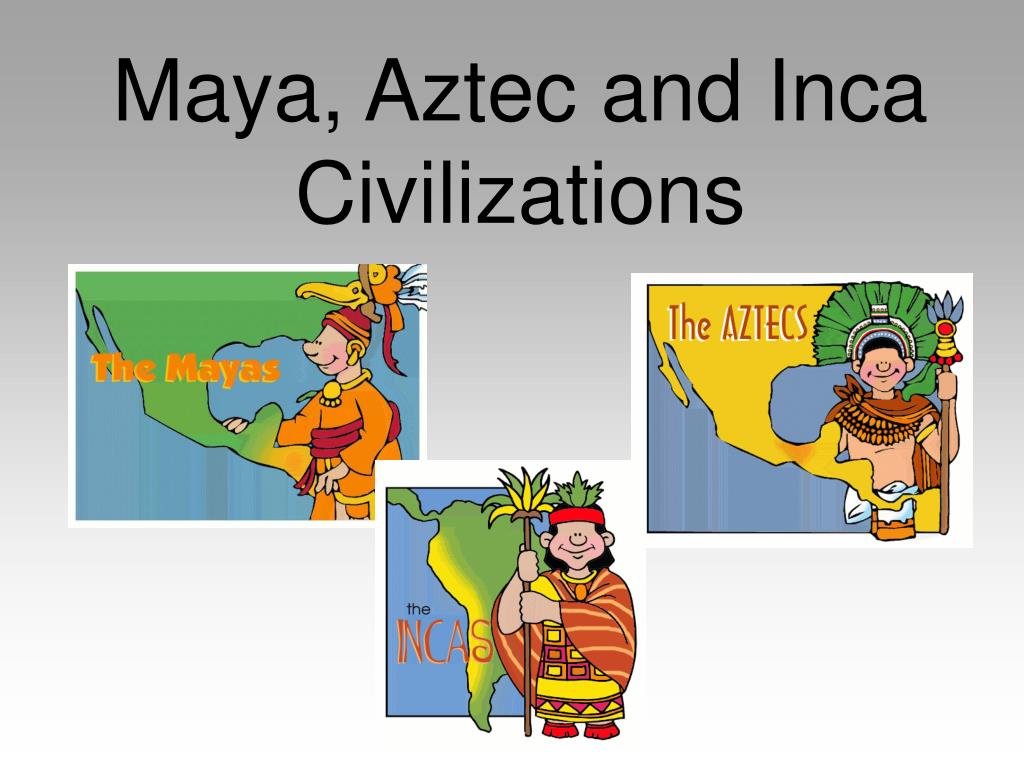
Maya, Aztec and Inca Civilizations. Essential Question. What are the cultural achievements of the Ancient Maya?. Timeline. Incas 1200-1500 CE. 1600 CE. 0 . Aztecs 1100-1521 CE. Maya 300-900 CE. The Mayas. What geographical features did the Mayan lands include?
Maya, Aztec and Inca Civilizations - slide 1
01 / 17Maya, Aztec and Inca Civilizations
1 / 17

Télécharger la présentation

Maya, Aztec and Inca Civilizations
Une image / un lien ci-dessous est fourni (tel quel) pour télécharger la présentation

Politique de téléchargement : le contenu du site vous est fourni TEL QUEL pour votre information et votre usage personnel ; il ne peut être vendu, concédé sous licence ni partagé sur d’autres sites sans l’accord de son auteur.Le contenu vous est fourni TEL QUEL, pour votre information et votre usage personnel uniquement. Téléchargez la présentation en cliquant sur ce lien. Lors du téléchargement, si vous ne parvenez pas à télécharger une présentation, l’éditeur a peut-être supprimé le fichier de son serveur.Pendant le téléchargement, si vous ne parvenez pas à obtenir une présentation, le fichier a peut-être été supprimé par l’éditeur.

F I N

Plus de contenu associé

Transcription de la présentation
  1. Maya, Aztec and Inca Civilizations

  2. Essential Question What are the cultural achievements of the Ancient Maya?

  3. Timeline Incas 1200-1500 CE 1600 CE 0 Aztecs 1100-1521 CE Maya 300-900 CE

  4. The Mayas • What geographical features did the Mayan lands include? • Southern Mexico (Yucatan Peninsula), Belize, Guatemala, El Salvador and Honduras • Gulf of Mexico to Caribbean Sea • Rugged highlands/swamps

  5. The Mayas • What did the Mayans look like? • Short with straight, black hair, painted bodies, tattoos, crossed eyes, flattened foreheads

  6. The Mayas • Why did Mayas tie objects from their infants’ foreheads? • To encourage their eyes to cross • Why did some Mayas tie boards to their children’s heads? • To flatten their foreheads – this was a sign of beauty in their culture

  7. The Mayas • What did early Mayas eat? • They fished and they grew maize (corn), beans, squash, peppers, avocados, and papayas

  8. The Mayan Eras • Pre-Classic: 2,500BC to AD 250 – fishing villages/learned to plant crops • Classic Era: AD 250 – AD 900 – built cities, pyramid temples, developed advanced math and astronomy and writing • Post-Classic Era: AD 900 – 1500 – Mayas left their great cities and scattered through out countryside – not sure why – we will discuss possible reasons

  9. The Maya - Tikal • Largest city - Tikal (in present day Guatemala) – 100,000+ people

  10. The Maya – Copan • 2nd Largest city – Copán (in present day Honduras) • The Great Staircase: 30ft wide, 63 steps, picture writing covers each step

  11. Chichen Itza – Large observatory tower used by ancient astronomers and Well of Sacrifice

  12. Mayan Writing • Borrowed a writing from Olmecs • Developed a system of writing using pictures (glyphs) and symbols

  13. Mayan Books • Made paper by pounding fibers from bark of ficus tree into pulp and glued it together with tree sap • When the paper dried they coated it with white lime • A Mayan book is called a codex • Fiber paper/deer hide for covers • Why did the Spanish destroy Mayan books? • Why do you think they thought they were evil?

  14. Mayan Math + = 7 + 3 = 10 - = - 7 = 18 11 - + + = - + 0 + 5 = 3 12 10 - = + 0 7 2 9 - = +

  15. Mayan Calendar • The Mayan priest used their knowledge of astronomy and math to develop two accurate calendars • One was sacred (religious), the other was for planning • The Mayan Calendar • solar year of 365 days. • divided into 18 months of 20 days each, followed by a five-day period that was highly unlucky. • Did the Mayan’s predicted that the world would end on December 21, 2012?

  16. The Great Mystery of the Maya • Around AD 850/900 the Mayas suddenly left their cities and were scattered throughout the countryside – Why?? • Some theories for why they did this include: • Natural Disasters – earthquake, hurricane, drought • Disease • Crop failures/famine (no plow, did not develop new agriculture methods) • Peasant rebellion against the priests and nobles who ruled the cities • Invaders - Toltecs