Download
1 / 17
170 likes | 295 Vues
Air toxics are hazardous chemical substances that can cause serious health effects, including cancer. There are 187 air toxics listed by the Clean Air Act (CAA), with major sources like chemical plants and coal-burning power plants, and area sources including vehicles and gas stations. Indoor pollutants such as formaldehyde and benzene also pose risks. Emission standards and regulations like Maximum Achievable Control Technology (MACT) aim to mitigate these dangers and protect public health and the environment. Learn more about how air toxics affect us and the measures in place to control them.

E N D
What are Air Toxics? • Toxic chemicals • Cause serious health effects such as cancer
How many are there? • Hundreds of different chemicals • In 1990 CAA, Congress listed 189 • Two later removed from list • 187 remain • www.epa.gov/ttn/atw/pollutants/atwsmod.html
Examples of Air Toxics • Asbestos • Benzene • Formaldehyde • Mercury • Perchloroethylene (Perc) • Vinyl chloride
Major Sources • Large sources • Chemical plants • Coke ovens • Coal-burning power plants • Refineries • More than 10 tpy of one air toxic • More than 25 tpy of combination of air toxics
Area Sources • Small sources • Vehicles • Gas stations • Auto body shops • Print shops • Dry cleaners • Surface coating operations
Indoor Sources • Woodstove: trash, treated wood • Indoor storage: fuel, paint, pesticides • Attached garage: exhaust, fuel, fumes • Cigarettes
Indoor Sources (cont.) • Household products • Clorox (chlorine) • Glass cleaners (ammonia, benzene) • Solvents • Mercury thermometers (if broken) • CFLs (if broken)
Indoor Sources (cont.) • Building materials/furnishings • Bleached fabrics (dioxins) • Pressed wood (formaldehyde) • New carpet • Paint • Glues
Environmental Effects • Soils • Water • Bioaccumulation
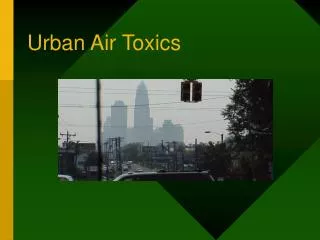
Greatest Risk • Near industrial facilities • Heavily polluted urban corridors • Subsistence hunting and fishing • Where air toxics bioaccumulate
Emission Standards • Health-based in 1970 Clean Air Act • Not implemented • Disagreement about regulating carcinogens • Technology-based in 1990 CAA
Regulation of Air Toxics • By source category • Regulate major sources first • Maximum Achievable Control Technology (MACT) • Pollution prevention • Emission controls • 96 MACT Rules
Six MACT Rules in 2011 • Marine tank vessel loading • Pharmaceuticals • Printing & publishing • Polymers & resins • Chromium electroplating • Steel pickling
CAA Provisions • Must consider cancer risk • People within 5 km of source • Must review MACT rules • 8 years after implementation • Residual Risk Review • Technology Review • Must consider cost
Summary • 187 Air Toxics • Major vs. Area sources • Indoor sources • Health & environmental effects • MACT