Adaptive immunity
This article explores the complex mechanisms of adaptive immunity, detailing how the immune system recognizes various antigens and learns from previous exposures. It discusses the crucial roles of B cells in antibody production, activation, and clonal selection, including responses to immunization. The article further examines the impacts of factors like irradiation on the immune response and the restoration of immune function. The structure of antibodies, including heavy and light chain gene segments and their variability, is also covered, along with the importance of memory cells in immune memory.

Adaptive immunity
E N D
Presentation Transcript
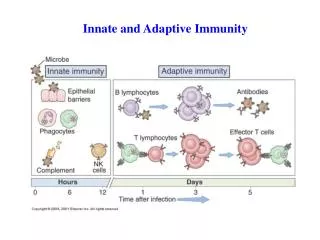
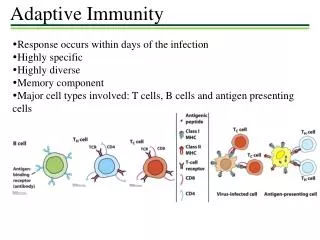
Adaptive immunity How can the immune system recognize so many different (previously unseen) insults? How does the immune system learn? How do B cells produce antibodies?
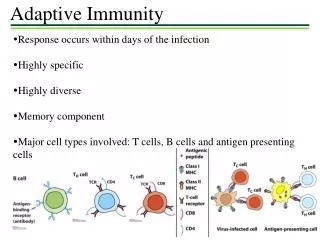
B cells TC (Cytotoxic T cells) TH (Helper T cells) Also function in immune system
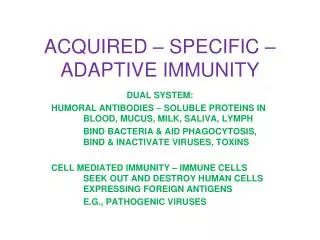
B cell activation Each naïve B cell makes a single type of antibody with a unique binding specificity Upon activation the naïve B cell proliferates and produces progeny that secrete that antibody
Primary response Secondary response
Antibody action:Activation of Complement Adaptive immunity (Innate immunity)
Antibody structure Determines antibody class
Human heavy chain gene-segment pool IgM IgG IgD IgE IgA 51 x 27 x 6 = 8262 possible H chain variable regions 40 x 5 = 200 possible k light chain variable regions 116 possible l chain variable regions 2.6 million possible antigen binding sites from gene segment combinations
Human heavy chain gene-segment pool 51 x 27 x 6 = 8262 possible H chain variable regions 40 x 5 = 200 possible k light chain variable regions 116 possible l chain variable regions 2.6 million possible antigen binding sites from gene segment combinations
Memory cells: Somatic hypermutation in V regions Class switching