Communication and Document Formatting
This guide covers essential aspects of formatting formal MLA reports, emphasizing the importance of clarity, tone, and bias-free language in academic writing. It outlines key components such as correct margins, double line spacing, and proper heading structure. Students will learn how to maintain a distinctive perspective and consistent tone throughout their work. Additionally, the document highlights the significance of proofreading to enhance the quality and precision of written communications. Elevate your report writing skills with these fundamental formatting guidelines!

Communication and Document Formatting
E N D
Presentation Transcript
Communication and Document Formatting BCS-BE-2: The student produces written communications that utilize proper tone, grammar, and bias-free language. Academic Standard: ELA10W1 (a) Establishes a clear, distinctive perspective and maintains a consistent tone and focus throughout. Essential Question: How do you format a formal MLA report? Why is it important to proofread any document?
Report • There are many different acceptable ways to format a report • Formatting depends upon the type and reason for report • Examples are: • Academic report • Technical report
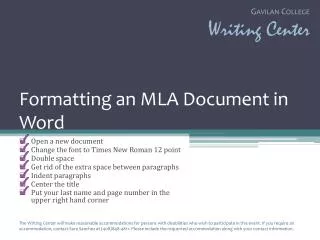
Academic Report Formatting • Use default margins (don’t change margins) • Change line spacing to double (entire document DS) • Four headings at the top left margin • Student’s name • Teacher’s name • Class or Subject • Date • Title of Report (Initial Caps) • Indent the first sentence in each paragraph by pressing the Tab key