Understanding the Skeletal System: Structure, Function, and Care
190 likes | 337 Vues
The skeletal system is a crucial framework made up of 206 bones that support the body, protect vital organs, and produce blood cells. Key functions include providing support, facilitating movement, and safeguarding critical organs like the brain and spinal cord. Understanding bone anatomy, including components like cartilage and ligaments, is essential for maintaining skeletal health. Common issues such as scoliosis and osteoporosis can affect bone strength, particularly with age. Regular exercise, a nutritious diet rich in calcium and vitamin D, and proper posture are vital for keeping bones healthy.


Understanding the Skeletal System: Structure, Function, and Care
E N D
Presentation Transcript
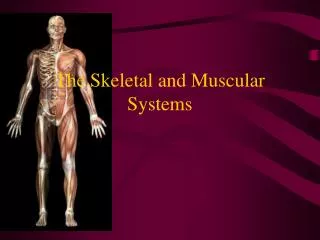
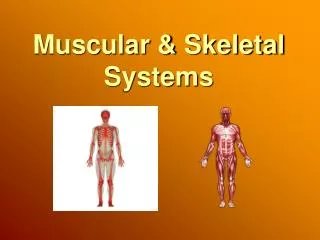
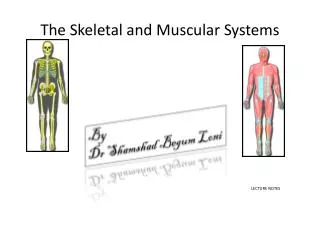
Unit B, Chapter 3, Lesson 1 The Skeletal and muscular systems
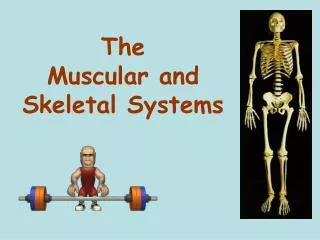
The Skeletal System • Made up of 206 bones. • The bones of the face, skull, vertebral column and rib cage make up your body’s central framework for support. (Protects vital organs!) • Functions: • Supports you • Allows you to move • Protects vital organs • Produces blood cells
The Skeletal System Skull Clavicle Scapula Humerus Sternum Rib Cage Vertebrae Ulna Radius Femur Patella Fibula Tibia
24 0 :10 0 The Femur is a bone in your arm. • Yes • No
10 What is the long bone in your upper arm called? • Radius • Femur • Humerus
24 0 If someone were to tell you that they broke their collar bone, which bone would they be talking about? • Scapula • Skull • Phalanges • Clavicle
10 0 of 24 Your vertebrae protect your… • Brain • Spinal Cord • Liver
10 Seconds Remaining Which of the following connect bones to bones? • Ligaments • Tendons • Cartilage
Anatomy of a Bone The Inside of a Long Bone Parts of a Long Bone • Spongy Bone • Bone Marrow • Compact Bone • Periosteum • http://kidshealth.org/misc/movie/bodybasics/bone.html
Support and Movement • Which bones provide support and movement? • Bones of the: • Arms • Legs • Pelvis • They work with muscles to help us move! • http://kidshealth.org/teen/your_body/body_basics/bones_muscles_joints.html
Important “Bone” Terms • Cartilage: a strong flexible tissue on the ends of some bones • It provides a cushion where bones come together. • Ligaments: strong cords of tissue that connect the bones in your joints.
How do our bones move? • Joint: a point at which two bones meet. • Without joints, you could not move. • Three main kinds of joints: • Hinge Joint • Ball and Socket Joint • Fixed Joint
Skeletal System Problems Scoliosis Photograph of someone with scoliosis. • Causes: deformity of the spine win which the spine develops an S-shaped curve when viewed from behind. • Can this affect you? Affects 2% of women and .5% of men in the general population
Skeletal System Problems Osteoporosis Osteoporosis Fact! • A disease in which bones become thin and brittle. • Who does this affect? • 55% of people who are over the age of 55. • Of the 10 million Americans who have this disease, 8 million are women and 2 million are men. • (from http://www.nof.org/osteoporosis/diseasefacts.htm) • About 85-90% of adult bone mass is acquired by age 18 in girls and 20 in boys. Building strong bones during childhood and adolescence can help to prevent osteoporosis later in life. • (from http://www.nof.org/osteoporosis/diseasefacts.htm)
Skeletal System Problems Sprain What happens when you sprain your ankle? • Stretching or partial tearing of ligaments. • Can be painful and cause swelling around the injured joint. • http://yucky.discovery.com/flash/body/yuckystuff/anklesprain/js.index.html
Caring for your Skeletal System • Exercise regularly using weights, walking, running, jumping rope, dancing, hiking, soccer, or basketball (just to name a few activities!). • Wear proper fitting shoes. • Select foods and beverages rich in calcium, phosphorus, and vitamin D. • Sit, stand, and walk with correct posture. • Participate in screenings for scoliosis.