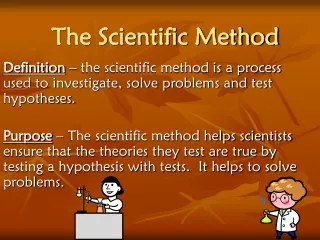
Understanding the Scientific Method - Types of Research, Correlations, and Ethics
Learn about various types of research methods, correlations, experimental designs, and ethical considerations in scientific studies. Explore examples and implications of different research approaches.

Understanding the Scientific Method - Types of Research, Correlations, and Ethics
E N D
Presentation Transcript
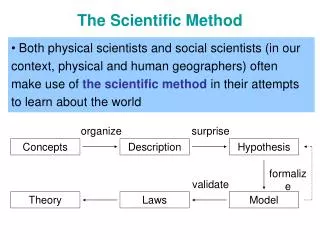
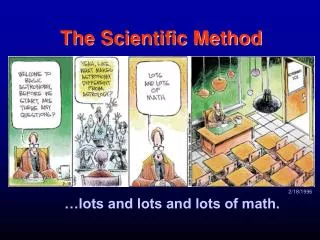
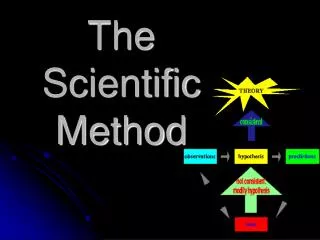
The Scientific Method • Do you remember this from science class? • http://education-portal.com/academy/lesson/psychology-is-a-science.html
Types of Research SIX types of Research
Naturalistic Observation • = observing behavior in the natural environment w/o manipulation • POSITIVES: • NEGATIVES:
Case Study • = a thorough study of an individual • CHRIS SIZEMORE - DID • Positives: • Negatives:
Surveys • = Collecting data about the beliefs, attitudes, or behaviors of people by asking them • Positives: • Negatives:
Controlled Experiments • = scientists compare 2 things or groups that are the same except for one variable • Example: Drug testing • Independent variable= • Dependent variable= • Experimental group= • Control group=
Hypothesis • Swimming regularly will lead to weight loss in obese subjects. • Independent variable= • Dependent variable= • Operational definition= • Experimental group= • Control group=
One big design problem to notice Are there any confounding variables we have not controlled for?
Confounding Variables • Example: Testing 2 groups of teens > one group is tested at 8am and the other at 1pm • Why might this be a problem? • Example: Testing a new method and an old > Group one gets the stodgy monotone teacher and Group two gets the attractive, young enthusiastic teacher
Correlational Research(speculation that may indicate a relationship exists) • Correlations: positive, negative or zero? • Typing practice and typing errors • Weight in pounds and hours of TV viewing • Educational level and income • IQ and levels of prejudice • # of peaches imported into the U.S. and divorce rates
Correlations (continued) • SAT scores and college GPA • SAT scores and teacher salaries • Number of plants in your home and number of times you brush your teeth daily • Educational level and levels of obedience to authority • Test anxiety and test performance
Correlational Research • How do we measure the strength of a correlation?
Correlational Research • Positive, negative or zero • Graphed on scatter plots • Expressed as an “r” coefficient • “r” coeffcients: • ranges from +1.00 to -1.00 • Absolute value of corr. coeff. indicates strength of relationship ex. r=-80 or r=+80
Correlational Research • What is the most important phrase to remember in correlational research? • Dr. Goldberger and the Pellegra epidemic
Experimental Method • Placebos • Blind • Double-blind study
Ethics of Research with Humans • Ethical review committee and ethical standards • Promote individual dignity, human welfare and scientific integrity • Ensure no harm will come to subjects • Informed consent • Confidentiality • Deception • Debriefing
Ethics of Research with Animals • Animals are used when research cannot be carried out with humans • Animals may be harmed, only when: • there is no alternative, and • benefits of the research justify the harm