The Urinary System
This chapter explores the physiology of urine formation by the kidneys, detailing the processes of excretion, elimination, and homeostatic regulation. It covers the anatomy and function of the male and female urinary systems, including the roles of the kidneys, ureters, bladder, and urethra. Key nephron components, such as the glomerulus and tubules, are examined for their functions in filtration, reabsorption, and secretion. Common urinary disorders, including incontinence, kidney stones, and urinary tract infections, are also discussed.

The Urinary System
E N D
Presentation Transcript
The Urinary System Chapter 26
Objective • Describe the physiology of urine formation by the kidney.
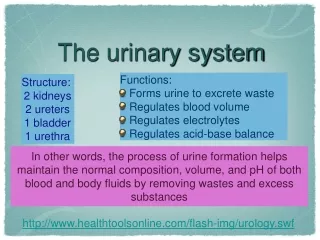
Functions • Excretion • removal of organic wastes from body fluid • Elimination • discharge of waste products • Homeostatic regulation • of blood plasma volume and solute concentration
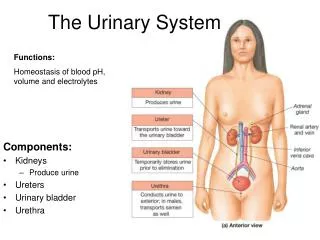
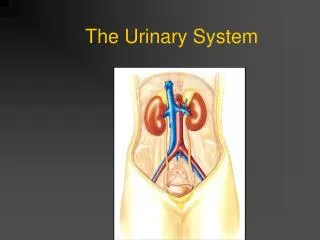
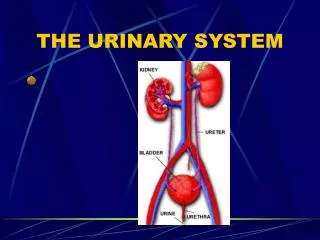
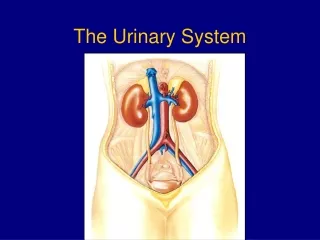
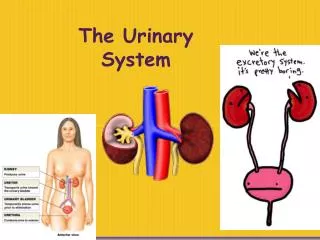
Urinary Organs • 2 Kidneys • excrete urine • Urinary tract: • Ureters • Urinary bladder • Urethra
Kidneys • Filter the blood and remove wastes • Each contain 1-2 million nephrons
Kidney Dissection • Outer Cortex • Inner Medulla • contain renal pyramids
Nephrons • Functional unit of the kidneys • Makes urine • Controls water balance • Regulates blood pressure
Nephrons • Glomerulus • Bowman’s Capsule • Proximal Convoluted Tubule • Loop of Henle • Distal Convoluted Tubule • Collecting Duct
Nephron Component Functions • Glomerulus: • mechanically filters blood • Bowman's Capsule: • mechanically filters blood • Proximal Convoluted Tubule: • reabsorbs 75% of the water, salts, glucose, and amino acids • Loop of Henle: • countercurrent exchange, which maintains the concentration gradient • Distal Convoluted Tubule: • tubular secretion of H ions, potassium, and certain drugs
Ureter • Paired tubes • Connects the kidney to the urinary bladder
Urinary Bladder • Smooth muscle bag • Stores waste solution - urine
Urethra • Connects bladder to outside of the body • Allows urine to pass out of the body
Basic Processes of Urine Formation • Filtration • Blood pressure • Water and solutes across glomerular capillaries • Reabsorption • The removal of water and solutes from the filtrate • Secretion • Transport of solutes from the peritubular fluid into the tubular fluid
Incontinence (urine leakage) • More than 10 million Americans experience incontinence • Most do not seek treatment • Treatment can improve or eliminate the problem 90% of the time
Kidney Stones • Solid mass of tiny crystals • Form when urine contains too much of certain substances • dehydration
Urinary Tract Infection (UTI) • Bacteria (E. coli) from the digestive tract get in the urinary tract • multiply • move from the urethra to the bladder to the kidneys • More common in women than men