Grasslands
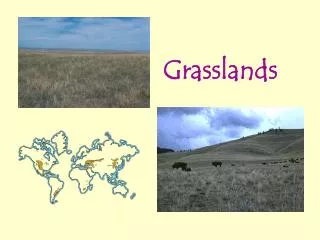
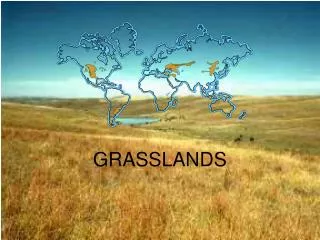
Grasslands are diverse ecosystems primarily located in continental interiors, characterized by seasonal droughts and occasional fires. They exist in three main types: Tropical, Temperate, and Polar. Tropical grasslands, like savannas, experience warm temperatures and distinct wet/dry seasons, while Temperate grasslands, such as prairies, feature cold winters and hot summers. Polar grasslands, including Arctic tundra, are frigid and low in precipitation. Human activities threaten these ecosystems through overgrazing, urban expansion, and fossil fuel extraction, demanding urgent conservation measures.

Grasslands
E N D
Presentation Transcript
Grasslands Gio Bruno APES December 1, 2011
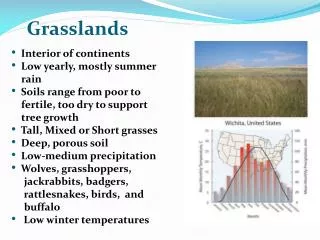
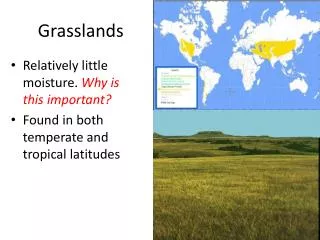
Characteristics • Occur mostly in interiors of continents • Found in areas too moist for deserts and too dry for forests • Have a seasonal drought • Result in occasional fires • Consist of large herbivores • Example: Wildebeest (Tropical) • 3 main types -> Tropical, Temperate, and Polar • Result from a combination of low average precipitation and various average temperatures
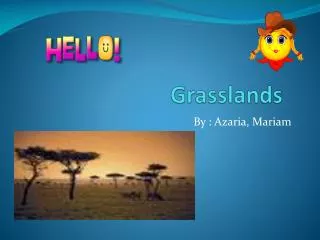
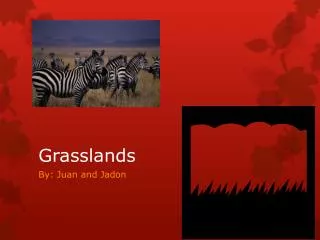
Tropical Grassland • Warm temperatures year-round and alternating wet/dry seasons • Far-sighted, Swift, and Stealthy animals have the best chance of surviving here • Plants adapt to survive through harsh weather conditions • Animals migrate to find food and water due to droughts and warm/cold temperatures • Stretches across parts of Africa, Australia, South America, India, and other dry, tropical regions • Example: Savanna
Temperate Grassland • Winters are very cold while the Summers are Hot and Dry • Precipitation is low and falls unevenly throughout the year • High in nutrient-rich soil • Used to grow crops, raise cattle, build towns and cities • Includes 2 types -> Short-grass Prairies and Long-grass Prairies • Continuous winds and rapid evaporation lead to fires • Example: Montana
Polar Grassland • Arctic Tundra • Very cold: snow and ice • Low in precipitation • Seasonal wetlands forms due to permafrost • Permafrost: Underground soil in which water stays frozen for more than 2 consecutive years • Animals adapt to harsh weather conditions • Example: Arctic Fox, Snowy Owl • Human activities leave scars in the soil and vegetation • Example: Oil Drilling
Polar Grassland cont. • Alpine Tundra • Occurs above the limit of tree growth but below the permanent snow line on high mountains • Similar vegetation to Arctic Tundra • More amount of sunlight than Arctic Tundra • No permafrost
Environmental Damage • Tropical Grassland – Overgrazing • Temperate Grassland – Building towns and cities • Polar Grassland – Oil Drilling
Solutions • Tropical Grassland • Must control amount of grazing animals allow per acre to decrease overgrazing • Temperate Grassland • Become aware of the fertile soil and how it’s being wasted to hold new building and cities • Polar Grassland • Reduce human needs for fossil fuel source
Bibliography • Miller Jr., G. Tyler. "Chapter 5: Climate and Terrestrial Biodiversity." Ed. Scott Spoolman. Living in the Environment. 15th ed. Thomson Learning Incorporated, 2007. 111-115. Print.