Download
1 / 11
110 likes | 259 Vues
The NOAA Hydrometeorological Prediction Center (HPC) collaborates closely with the Satellite Analysis Branch (SAB) to enhance precipitation forecasting accuracy. This partnership provides vital satellite data and regular briefings to HPC forecasters, aiding in the development of Quantitative Precipitation Forecasts (QPF) for Days 1-3. The integration of advanced satellite-derived data, including infrared imagery and microwave sounder information, plays a crucial role in predicting excessive rainfall and winter storm impacts.

E N D
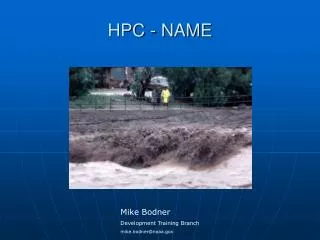
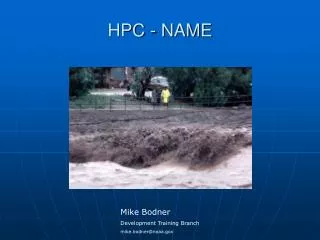
HPC - NAME Mike Bodner Development Training Branch mike.bodner@noaa.gov
HPC Text Discussions • Model Diagnostic • Day 1-3 QPF • Excessive Rainfall
National Precipitation Pred iction Unit (NPPU)HPC and SAB Working Relationship • Satellite Analysis Branch (SAB) of NESDIS is co-located with HPC • The SAB precipitation meteorologists provide 6 regularly scheduled satellite briefings per day to HPC QPF forecasters
SAB Products • Satellite precipitation estimates • Guidance for heavy rain and snow associated with winter storms • Satellite precipitation estimate message (SPENES) ►GOES infrared (IR), visible, and water vapor imagery ►GOES Sounder data and Derived Product Imagery ►GOES satellite-derived winds ►Special Sensor Microwave Imager (SSM/I) ►NOAA Advanced Microwave Sounder Unit (AMSU) ►Surface and upper air data