Comprehensive Overview of Sickle Cell Disease Effects on Major Body Systems
70 likes | 229 Vues
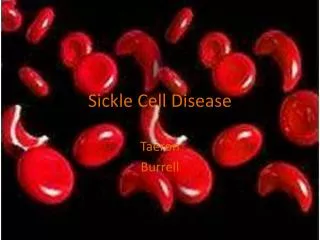
Sickle cell disease significantly impacts various body systems due to the presence of misshapen red blood cells (RBCs). The cardiovascular system suffers impaired blood flow, leading to potential blood clots as nutrients struggle to be transported. The nervous system is at risk of complications such as stroke and loss of eyesight. The immune system is hindered by blockages, while the respiratory system is unable to carry sufficient oxygen. Additionally, digestion is affected due to impaired nutrient transportation, and urinary function can fail if urine cannot reach the urethra.


Comprehensive Overview of Sickle Cell Disease Effects on Major Body Systems
E N D
Presentation Transcript
Sickle Cell Disease Mason Clark Max Smith Neil Towery Leslie Probus
Cardiovascular System Effects • Misshapen RBCs lead to impaired blood flow • Needed nutrients can’t be transported effectively • Can lead to blood clots
Nervous System Effects • Can lead to: • stroke • ischemic attack • “silent” infarction • bleeding of the brain • loss of eyesight
Immune System Effects • Immune system functions via bloodstream • Blockages due to sickled cells can impair function
Respiratory System Effects • Blood cells transport oxygen through body • Sickled cells can’t contain adequate amounts of oxygen due to their shape
Digestive System Effects • Nutrients from food travel in blood stream • Impaired blood flow will cause nutrients not to get to their destination, or cause it not to be digested at all. • The lack of blood can also cause the parts of the digestive system to lose the ability to work completely, such as your teeth.
Urinary System Effects • Urine to be expelled travels through blood stream • If the urine can’t get to the urethra, then it can’t be expelled.