
Earth System Science: A Unified Approach to Understanding Our Planet
E N D
Presentation Transcript
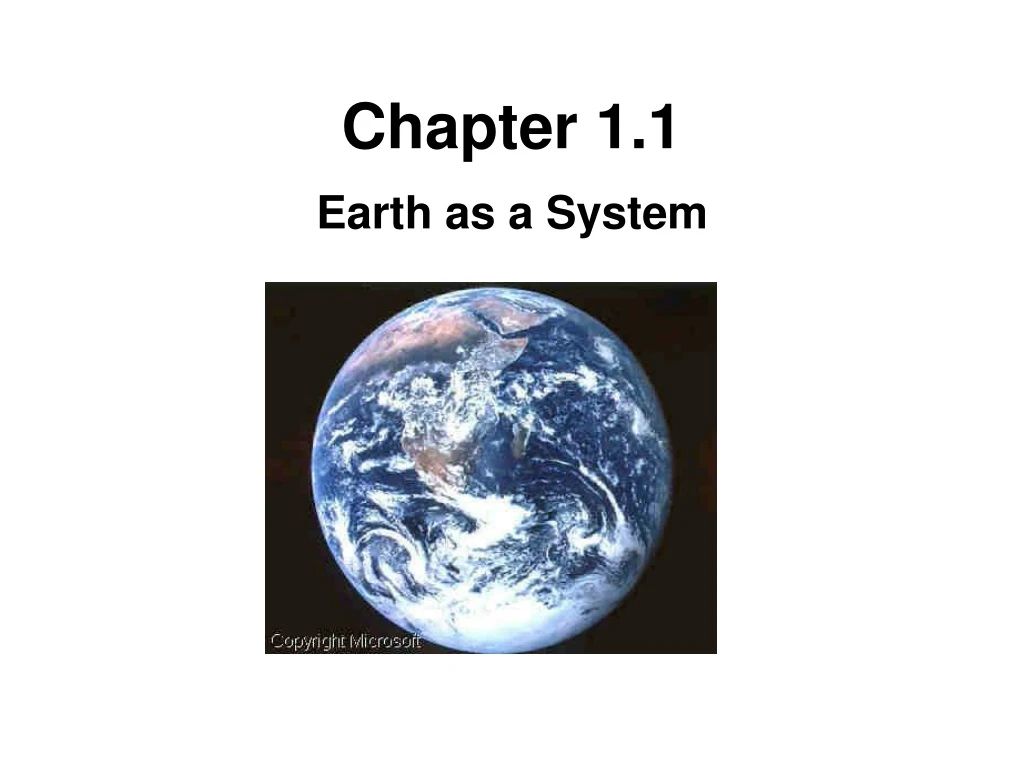
Chapter 1.1 Earth as a System
Branches of Science • Earth Science • The study of the Earth, its atmosphere, and the universe surrounding it. • Biology • Also referred to as Life Science. • The study of living things. • Chemistry • The study of the interaction of matter. • Physics • The study of motion.
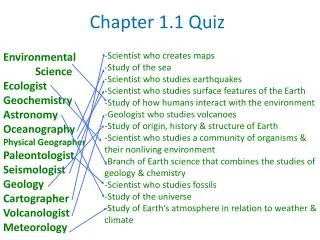
Past View…Branches of Earth Science • In the past, Earth Science was viewed as having 4 distinct and separate branches. • Geology • The study of the solid Earth as well as the processes that change and shape it. • Examples) rocks, volcanoes, rivers, glaciers • Astronomy • The study of the universe beyond Earth • Examples) stars, the Sun, the Moon, planets • Oceanography • The study of the Earth's oceans • Examples) ocean temperatures, saline (salt) levels • Meteorology • The study of the Earth’s atmosphere • Examples) weather patterns, tropical storms
Today's view…Earth System Science • Earth is more than a collection of parts • Each branch of Earth Science is connected to one another
What is a System? • A system is a kind of model; a part of the universe that can be studied separately • A model is a representation of an object, a process or a phenomenon. • Scientists often describe the natural world by using models such as open and closed systems
Closed System • Energy, such as sunlight, may enter, but matter doesn’t enter or leave • Example) Sun Tea • Sunlight can enter • Heat can leave • If jar is tipped, tea stays in • The jar of tea does not share matter with its surroundings, only energy
Another Example • Deep-Sea Submersible • Minimal loss of energy to surrounding ocean • Keeps water out protecting researchers • Keeps air in so researchers can breathe
Open System • The system and its surroundings freely exchange both energy and matter • Example) glass of iced tea • Tea can evaporate • A bug can fly in (ew!) • A lemon slice and a straw are added
Another Example • An island • Sunlight strikes the surface warming it • Rain falls onto the island • Sediment runs off into the ocean
Is Earth Open or Closed? • Scientists consider Earth to be essentially closed • Energy is received from the sun and most is reflected back • Overall Earth’s mass remains relatively constant • System is not entirely closed • Atmosphere loses hydrogen atoms to space • Meteorites enter the atmosphere