Industrial Revolution
The Industrial Revolution led to a massive shift in population from rural areas to cities after 1800, driven by the growth of factories. Rapid urbanization resulted in poor living conditions, with inadequate sanitation, housing, and basic services, contributing to widespread disease and a low life expectancy in urban areas. Despite harsh working conditions and the rise of a new middle class as factory owners and merchants gained wealth, the period also created jobs and increased production, ultimately boosting national wealth and living standards, albeit with significant environmental repercussions.


Industrial Revolution
E N D
Presentation Transcript
Industrial Revolution Social Impact
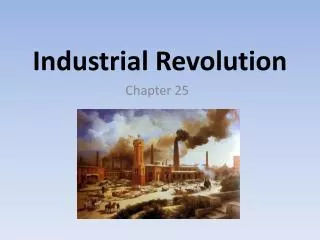
Urbanization • After 1800, more people started to live in cities • Growth of factory system was the driving force behind the growth of cities • Industrial centers grew wherever there were natural resources and reliable forms of transportation (rivers, canals, roads, rail lines)
Living Conditions • Rapid urbanization meant no city planning, sanitary or building codes (government could not keep up) • Unpaved roads, poor sewers, lack of adequate housing, education, fire and police protection • Homes were dark, dirty, and cramped • People were often sick and many died of disease (cholera epidemics were frequent) • Average life span in 1842 was 17 in cities compared to 38 in rural areas
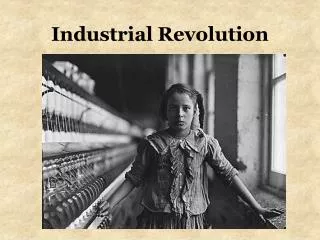
Working Conditions • 14 hour days • 6 days a week • Poorly lit and dirty factories led to accidents that injured and killed workers • No government oversight or insurance for injuries
The Middle Class • Factory owners, merchants, bankers now had more money than landowners and aristocrats (who used to hold all the power) • Landowners looked down on those who made money through business • Upper Middle Class- government employees, doctors, lawyers, and managers • Lower Middle Class- Factory overseers, skilled workers, drafters, printers
The Working Class • 1800-1850 laborers saw little improvement in conditions • Replaced by machines • Violence broke out over poor living and working conditions throughout England
Positive Effects • Created jobs for workers • Contributed to the wealth of the nation • New technology and inventions • Increased production rates • Raised the standard of living • Provided hope for improvement in people’s lives • Better diets, housing, clothing eventually • Expanded educational opportunities
Environmental Impact • Increased air pollution • Increased environmental damage due to mining, clearing of land, air pollution from factories and contamination of water supplies