Download

1 / 7
70 likes | 201 Vues
This review highlights essential terms related to the Russian Revolutions, including pivotal events and figures. The Decemberist Revolt marked the first significant challenge to Czar Nicholas I, leading to widespread exile in Siberia. The Revolution of 1905 followed Bloody Sunday, prompting the formation of the Duma. The March Revolution forced Nicholas II to abdicate. The Bolshevik Revolution, led by Lenin, introduced communism to Russia. Other key concepts include the Cheka, Treaty of Brest-Litovsk, and the establishment of Soviets, integral to understanding Russia's tumultuous path to revolution.

E N D
RUSSIAN REVOLUTIONS TEST REVIEW
TERMS • DECEMBERIST REVOLT – Decemberists tried to overthrow Nicholas I; resulted in 100s of revolutionaries exiled to Siberia; czar forced Jews to Germany • REVOLUTION OF 1905 – began as a result of Bloody Sunday; forced the czar to create a Duma • MARCH REVOLUTION - people rioted and went on strike because of food shortages; forced czar Nicholas II to abdicate the throne
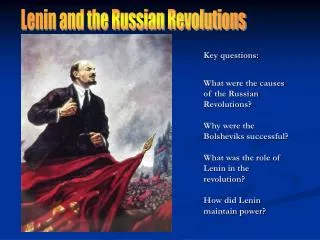
BOLSHEVIK REVOLUTION – Socialist Revolution led by Lenin; leaders believed in the teachings of Marx; Cheka created to destroy opposition; brought communism to Russia • BLOODY SUNDAY – the day Father Gapon and followers were shot at by the czar’s army as they marched to the palace; began the Revolution of 1905 • COMMUNISM – classless society where everyone’s needs are taken care of; government controls politics, society and industry
CHEKA – created to destroy opposition during the Bolshevik Revolution • DUMA – czar created the government body during Rev. of 1905 to make changes • COMMUNIST MANIFESTO – written by Marx and Engles • RED ARMY – set up by Leon Trotsky; opposed by the White Army (anti-communists) • TREATY OF BREST-LETOVSK – ended Russia’s involvement in WWI
SOVIETS – government bodies set up to challenge the existing government during the March Rev. • PETROGRAD – originally St. Petersburg; sounded too German • MOSCOW – the capital of Russia • SIBERIA – Northeastern region of Russia where 150,000 people exiled after the Decemberist Revolt
PEOPLE • NICHOLAS I – took over the throne when Alexander I suddenly died; forced Jews to Germany during Decembrist Revolt • NICHOLAS II – abdicated the throne during the March Revolution of 1917 • FATHER GAPON – lead a group to palace to ask Nicholas II for better working condition, while they were on their way they were shot at Bloody Sunday
ALEXANDER II- first to make reform (frees serfs & improved infrastructure) assassinated • KARL MARX – wrote Communist Manifesto; father of communism • FREIDRICK ENGLES – wrote Communist Manifesto with Marx • VLADIMIR LENIN – lead the Socialist Revolution known as the Bolshevik Revolution • LEON TROTSKY – trained the Red Army during the Bolshevik Revolution, worked with and influenced Lenin