Download
1 / 51
510 likes | 643 Vues
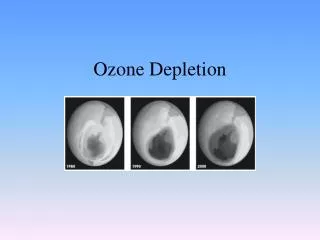
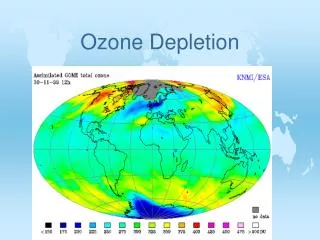
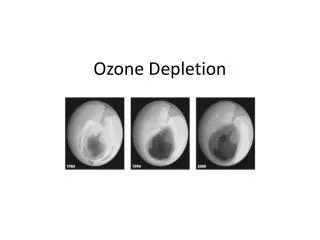
Ozone depletion results in a decrease of over 1% in Ozone (O3), leading to a significant rise in UV radiation exposure. Key ozone-depleting substances include CFCs, halons, carbon tetrachloride, and HCFCs. This exacerbates greenhouse warming, influenced by factors such as water vapor, carbon dioxide, and methane. Concerns include food supply threats, rising sea levels, and negative ecological impacts like extinction. As the earth approaches critical tipping points, renewable energy sources such as solar, wind, and nuclear are explored as potential solutions.

E N D
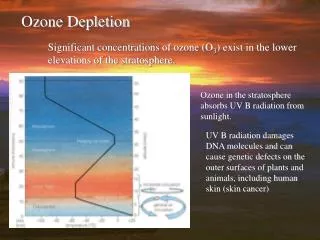
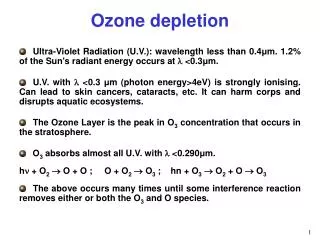
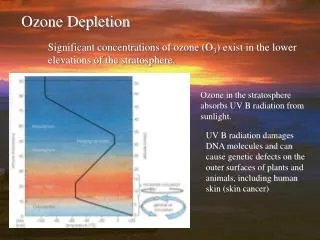
UV O3 1% Decrease in Ozone Greater than 1% Increase in UV Radiation
Ozone Depleting Gases • CFC’s • Halons/Bromides • Carbon tetrachloride • Methyl chloroform • HCFC’s • Etc.
Solar E Albedo (1/3)
Solar E Emissivity
Solar E Albedo (1/3)
Solar E Albedo
Solar E Albedo (1/3)
Solar E Albedo
Solar E Emissivity
Solar E Emissivity
Solar E Emissivity
Solar E Emissivity
Greenhouse Gases • Water vapor • Carbon dioxide • Methane • Nitrous oxide • Ozone • CFC’s • Etc.
Concerns: • Food supply • Rising sea levels • Water supplies • Firestorms (positive feedback) • Methane venting (positive feedback) • Disruption of thermal conveyor • Ecological disruptions/extinctions • Past the tipping point?
Going “Green” • Ethanol • Waste fuels • Solar • Wind • Tidal • Geothermal • Fuel cells • Nuclear • Etc.
Pollution • Point source • Nonpoint source • Primary • Secondary
Water pollutants • Oxygen demanding wastes • Plant nutrients • Pathogens • SOC’s • Inorganic minerals • Heat • Radioactive substances
Industrial/East Coast Smog • Coal • Sulfur • Forms H2SO4 • Particulates
Photochemical/WestCoast Smog • Gasoline • Nitrgen • Forms HNO3 • Ozone, PANS, Aldehydes, etc.