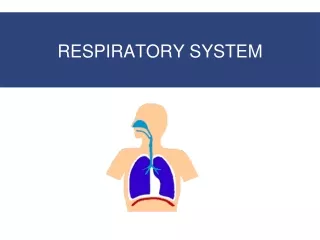
Respiratory System
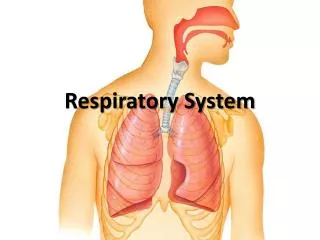
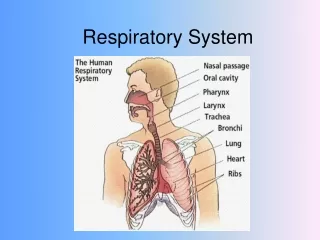
This informative video explores the differences between healthy lungs and the lungs of smokers, highlighting the structure and function of the respiratory system. Viewers will learn about the upper and lower respiratory tract components, including the nasal cavity, pharynx, larynx, bronchi, and alveoli. The video includes animations and diagrams to aid understanding, as well as insights into how various structures like the diaphragm and epiglottis contribute to respiration. Understanding these differences can promote awareness about lung health and the impacts of smoking.

Respiratory System
E N D
Presentation Transcript
Healthy Lung Vs. Smokers Lung • http://www.youtube.com/watch?v=yskYG-EVlBY • https://www.youtube.com/watch?v=yIURbmJZxIg
Upper Respiratory system • Internal Nares- Allows air to enter the nose and pass through into the nasal cavity
Upper Respiratory System • Nasopharynx- upper most part of the pharynx; passage way for air
Upper Respiratory System • Eustachian Tubes- links pharynx to middle ear; pressure equalization, mucus drainage
Upper respiratory system • Hard Palate- roof of the mouth; speech production
Upper Respiratory System • Soft Palate- does not contain bone • located at the back of the mouth • speech production, separates nasal cavity and oral cavity when swallowing
Upper Respiratory System • Palatine Tonsil- left and right side of the back of the throat; provides defense against pathogens
Upper respiratory system • Oropharynx- below soft palate and below epiglottis; passage way for air and food
Upper Respiratory system • Epiglottis- flap structure that allows air to enter the trachea
Upper Respiratory System • Glottis- slit of the epiglottis, space between vocal chords; adds buzzing quality to speech Glottis
Upper respiratory system • Vocal Folds • Production of sounds used for speech • Regulate flow of air into lungs
Upper respiratory system • Laryngopharynx- lower part of pharynx; passage of air and food
Upper respiratory system • Trachea- ciliated mucus membrane; filters air and traps particles
Upper respiratory system • Nasal Conchae • Increase Surface area for filtration of air • Warms and moistens air
Upper respiratory system • Nasal Vestibule • Beginning of nasal passage • Hair helps to capture large particles
Upper respiratory system • Oral Cavity- mouth • Lining of the mouth and saliva glands aid provide lubrication • Aids in speech, swallowing, and digestion of food
Upper respiratory system • Tongue- aids in speech and in swallowing to cover up epiglottis when you swallow
Upper respiratory system • Thyroid Cartilage- Adam’s Apple • Protection and support for the vocal folds
Upper respiratory System • Cricoid Cartilage • Connection for ligaments, cartilage, and muscles • Facilitates opening and shutting of air passage • Production of sound
Lower respiratory system • Larynx • Between the pharynx and trachea • Houses the vocal folds • A passageway for air moving in and out of the trachea
Lower respiratory system • Parietal Pleura • Lines the inner wall of the chest • Covers the diaphragm • Lubrication- serous fluid
Lower respiratory system • Visceral Pleura • Membrane on the lung • Easy movement of lungs within chest wall
Lower respiratory system • Alveolar Sac • Cluster of alveoli located at the end of each alveolar duct • Contain alveoli
Lower respiratory system • Alveolar Duct • Connects bronchioles to alveolar sacs
Lower respiratory system • Alveolus • Site of gas exchange with blood • Secrete Surfactant
Lower respiratory system • Diaphragm • Muscle that separates thoracic cavity from abdominal cavity • Performs an important function in respiration
Lower respiratory system • Tracheal Cartilage • Shape and support trachea • Ring Shaped- 16 to 20
Lower respiratory system • Apex of Lung • Rounded upper portion of the lung
Lower respiratory system • Mediastinum • Divides thoracic cavity into two pleural cavities
Lower respiratory system • Left Primary Bronchus • Main passageway into the lungs
Lower respiratory system • Lower Terminal Bronchioles • End of the conduction zone • Transitions to the respiratory zone
Lower respiratory system • Conduction Zone • Nose, pharynx, larynx, trachea, bronchi, bronchioles, and terminal bronchioles • Respiratory Zone • Site of gas exchange; CO2 and O2
Lower respiratory system • Carina • Bottom of trachea; splits into primary bronchus • Mucus membrane is sensitive and triggers cough reflex
Lower respiratory system • Secondary Bronchi (120) • Branches off of the primary bronchi • Tertiary Bronchi (121) • Branches off of the tertiary bronchi • Splits into bronchioles
Respiratory System • _____________ provides an opening for air to enter and leave the nasal cavity. • List the three ways in which the upper respiratory system filters the air before it reaches the lungs. • Describe the function of the epiglottis. • The _____________ are the primary site for gas exchange. • Explain the difference between the conduction zone and the respiratory zone. • Describe the function of the diaphragm.