Understanding Key Amendments: Protecting Rights and Freedoms in the US Constitution
This overview of critical amendments in the United States Constitution highlights the essential rights and freedoms guaranteed to citizens. It covers the First Amendment, which ensures freedom of religion and expression; the Fourth Amendment, protecting against unreasonable searches; the Fifth Amendment, safeguarding against self-incrimination and ensuring due process; the Sixth Amendment, guaranteeing the right to a speedy trial; the Eighth Amendment, which prohibits excessive bail and cruel punishment; and the Fourteenth Amendment, ensuring equal protection under the law.

Understanding Key Amendments: Protecting Rights and Freedoms in the US Constitution
E N D
Presentation Transcript
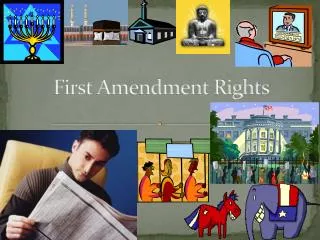
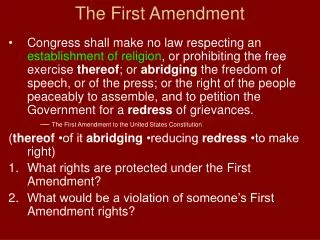
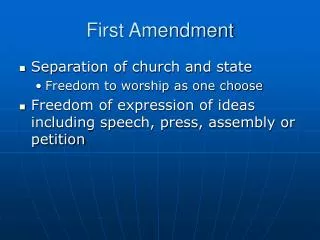
First Amendment • Separation of church and state • Freedom to worship as one choose • Freedom of expression of ideas including speech, press, assembly or petition
Fourth Amendment • Freedom from unreasonable searches and seizures • Warrants must have probable cause • Of warrants must state items or persons searched or seized
Fifth Amendment • People may not be compelled to witness against themselves • Of people may not be deprived of life or property without due process • No double jeopardy • Private property may not be taken for public use without compensation
Sixth Amendment • Right to a speedy trial • Right to a jury • Right to confront witnesses and accusers • Right to a legal counsel
Eighth Amendment • Protection from excessive bails and fines • Protection from cruel and unusual punishment
Fourteenth Amendment • No state can make law which alters the privileges or immunities of US citizens • Equal protection