Download
1 / 15
150 likes | 262 Vues
This article by Jolanta Cihanovica delves into the impact of personal wellbeing on activists. It highlights how our emotional states can significantly influence our behavior: negative feelings lead to aggression and rigidity, while positive feelings foster creativity and flexibility. The piece emphasizes the importance of understanding stressors and their dangers to personality and movement efficacy. Various tools for enhancing wellbeing are discussed, including insights into bodily awareness, emotional health, thinking patterns, and relationship dynamics, ultimately aiming for a healthier activist community.

E N D
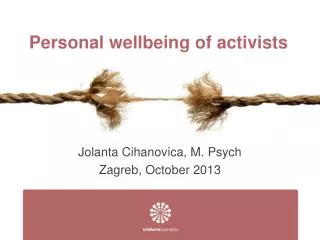
Personalwellbeingofactivists Jolanta Cihanovica, M. Psych Zagreb, October 2013
When we feel bad, we are: • more aggressive • less open-minded • more critical • less flexible • less supportive • less patient • less creative
When we feel good, we are: • more productive • more motivated • more courageous • more creative • more progressive • more understanding • more flexible
Activistsunder stress What’s thedanger?
Tools • Body • Emotions • Thinking • Competence • Relationships • Meaning
Agreement Planning Reviewing Development and training Giving and receiving feedback Performance Acting Controlling The Big Picture Performance Management Cycle