Discovering Southern Europe: Culture, Geography, and Resources of Italy, Spain, and Greece
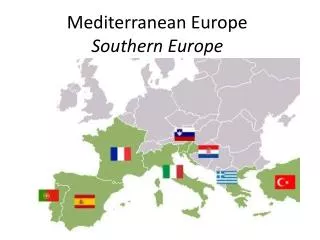
Southern Europe is a rich tapestry of culture, history, and geographical features. Home to Italy, Spain, Portugal, Greece, and the city-states of Vatican City and San Marino, this region boasts stunning landscapes like the Alps and the Iberian Peninsula. Each country offers a unique blend of economic contributions, with Italy known for its rich culture and cities like Rome, Spain for its beaches and bustling tourism, and Greece for its agricultural produce and historical significance. Explore the diverse climates, resources, and rich heritage that define this captivating area.

Discovering Southern Europe: Culture, Geography, and Resources of Italy, Spain, and Greece
E N D
Presentation Transcript
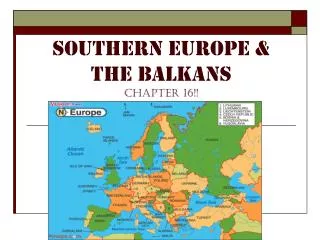
Southern Europe Southern: Italy, Spain, Portugal, Vatican City, San Marino, Greece
Southern Europe Matching Italy San Marino Vatican City Spain Greece Portugal
Physical Features • Peninsulas • Iberian (home to Spain and Portugal) • Pyrenees Mountains – block off peninsula from rest of Europe • Italian (boot of Italy) • Alps • Most famous mountain chain in Europe • Stretch across France, Italy, Germany, Switzerland, Austria, and the northern Balkan Peninsula • Cut Italy off from rest of Europe • Islands • Corsica, Sardinia, Sicily, Crete
Climates • Western Europe: • Marine West Coast (mainly) • Highland and Humid Subtropical • Southern Europe: • Mainly Mediterranean • Some Marine West Coast, Semiarid, and Humid Subtropical
Southern Resources • Majority Zinc and Coal • Biggest variety of resources found in Spain
Water Pollution: Venice • Industrial waste, sewage, and saltwater combine together and eat away the foundations of buildings (damage) • Erosion is allowing large amounts of seawater into the lagoon • “Killer Algae”: decaying algae uses up all the oxygen which causes fish in water to die as well = insects in water = STENCH!
ITALY • Rich culture • The Roman Empire • Ruled most of the Italian Peninsula • Grew by conquering overseas territories • The Renaissance (‘rebirth’) – a renewed interest in learning (Leonardo DaVinci)
Landmarks • Rome is the capital & largest city • Home to the Colosseum and other Roman ruins.
Southern Italy has many naturaldisasters Earthquakes, Volcanic Activity, Floods, & Droughts • Home to Mt. Vesuvius and the ancient city of Pompeii
Italy’s Economic Problems • Italy: • Northern region is much more developed than Southern region • Why? • North is closer to industrial nations (Germany & France) • South = poor transportation systems • Southern government made poor decisions when promoting growth
The island of Sicily – large island on the southern coast of Italy • Mt. Etna, an active volcano
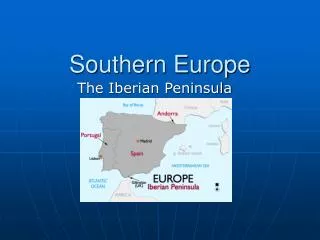
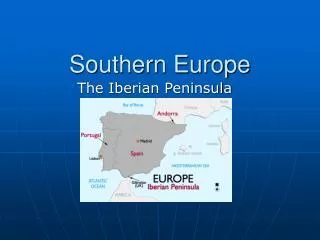
SPAIN & PORTUGAL • Together form the Iberian Peninsula • Capital of Spain = Madrid • Capital of Portugal = Lisbon
One of the world’s largest tourist industries • Beaches & rich culture
Fishing is a large part of economy • Have a long history of sailing
Background • The Iberian Peninsula was ruled by the Moors (a Muslim people from North Africa) for over 700 years
Were the most powerful European nations; controlled sea trade during the 15th – 16th century • Had a huge colonial empire and was a leader in the spice trade.
VATICAN CITY • An independent state surrounded by the city of Rome • Smallest country in the world (0.2sq. Miles)
The pope, the head of the Roman Catholic church, has absolute political authority within the city
GREECE • Agricultural products – olive oil, tobacco, grapes, & citrus fruits • Shipping is big part of economy
Background • Ancient Greece – vital to the development of Western culture • City-state – “birth of democracy”
Ancient city of Sparta – famous for itsathletesandwarriors(movie “300”)
Capital =Athens • Home of the Acropoliswith the Parthenon(one of the world’s most photographed and famous buildings)
SAN MARINO • San Marino was founded early in the 4th century by Christians escaping persecution • One of the oldest and smallest republics / countries