Overview of the Aluminum Can Manufacturing Process
This document outlines the manufacturing process of aluminum cans, highlighting key stages such as raw material preparation, shearing, coating, slitting, welding, necking, seaming, and inspection. Originating in 1959, the aluminum can was revolutionary, weighing less than half an ounce. Each step in the production, from adding protective lacquer to palletizing finished products, is crucial for quality and durability. Key materials include aluminum, brass, bronze, mild steel, and stainless steel. Inspection ensures each can meets standards before final packaging.

Overview of the Aluminum Can Manufacturing Process
E N D
Presentation Transcript
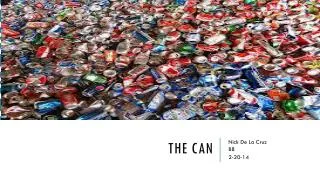
The CAN Nick De La Cruz B8 2-20-14
Manufacturing process • Raw Materials- Aluminum • First aluminum can 1959 • Weighed less than half an ounce
Shearing • Used to cut straight lines on flat metal stock. • Performed on sheet, strip, bar, plate, and even angle stock. Aluminum • Brass • Bronze • Mild steel • Stainless steel
Coating • Add think layer of paint • Or picture of any kind
Slitting • Slitting-Separation of metal after coating
Welding Weld- join together metal pieces by heating the surfaces to the point of melting using a blowtorch,
curing • This step is to preserve the welded cans
Necking • Necking -a short, plain, concave section between the capital and the shaft of a classical Doric or Tuscan column.
Seaming • Seam- • join with a seam.
Inspection Later the cans are inspected. If the inspection is alright then they are palletized. And the process is complete.
Lacquering • To put a liquid into a protective coating of wood, metal etc.. • Then more curing • Last palletized
Sources • http://www.jstradingco.com/can.html • http://www.novelis.com/en-us/Pages/Raw-Materials-Recycling.aspx https://www.google.com/search?q=cans&safe=active&source=lnms&tbm=isch&sa=X&ei=1WUGU63fC-bmyQHD5oC4Cw&ved=0CAcQ_AUoAQ&biw=1242&bih=565 http://www.aluminum.org/Content/NavigationMenu/TheIndustry/PackagingConsumerProductMarket/Can/default.htm http://www.all-metalfab.com/shearing.shtml