Download
1 / 4
40 likes | 191 Vues
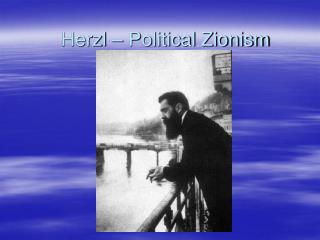
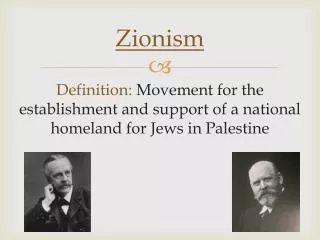
In 1897, Theodor Herzl convened the First Zionist Congress in Basel, aiming to establish a Jewish homeland and restore national identity amidst rampant anti-Semitism and social injustices. Herzl's vision, articulated in "The Jewish State" (1896), underscored the necessity of political Zionism as a response to pervasive economic and social persecution faced by Jews in Europe. Prominent figures like Max Nordau emphasized that Jewish emancipation had diluted national identity, necessitating a rekindling through Zionism. The establishment of the World Zionist Organization marked a new era in Jewish self-determination.

E N D
1897 The First Zionist Congress • Theodor Herzl • The Jewish State, 1896 • Alteneuland, 1902 • „The persecutions were social and economic. Jewish merchants were boycotted, Jewish workingmen starved out, Jewish professional men proscribed [...]. The blood libel was revived; and at the same time the Jews were accused of poisoning the press, as in the Middle Ages they had been accused of poisoning the wells. As workingmen the Jews were hated by their Christian fellows for undercutting the wage standards. As businessmen they were dubbed profiteers. Whether Jews were rich or poor or middle-class, they were hated just the same.“
1897 The First Zionist Congress • Max Nordau • „The western Jew has bread but man does not live on bread alone.“ • Emancipation put an end to Jewish national identity – that needs to recreated through zionism • Judenstaat, 1896: Jews are a nation, not merely a religious group
1897 The First Zionist Congress • Basel • Est. WZO – effective political institution