Understanding Fats: Types, Functions, and Health Implications
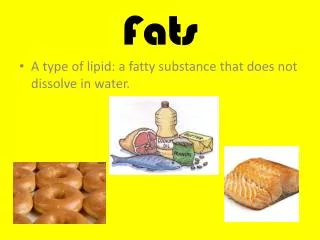
Fats are essential macronutrients that provide heat, energy, and vital fatty acids necessary for the body. They support organ growth, maintain healthy skin, promote cell growth, and transport essential vitamins A, D, E, and K. Fats are categorized into saturated and unsaturated types. Saturated fats are typically found in animal products and are solid at room temperature, while unsaturated fats come from plant sources and are liquid. Understanding the impact of hydrogenated oils and trans fats is crucial for nutritional choices.


Understanding Fats: Types, Functions, and Health Implications
E N D
Presentation Transcript
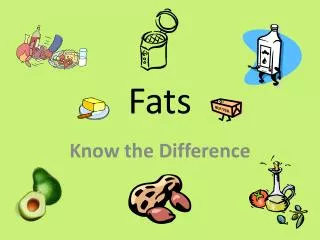
Functions • Provides heat, energy and essential fatty acids • Supports organ growth (eg. Kidneys, eyes, etc) • Maintains healthy skin • Promotes cell growth • Transports vitamins A D E K • Forms nerve sheath, hormones • Makes food taste better
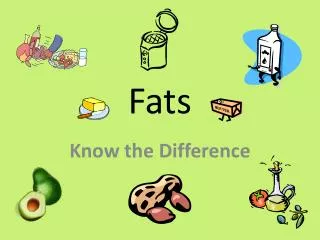
Saturated fat • Animal products • Solid at room temperature • Contains cholesterol • Butter, lard, shortening, coconut oil, palm oil, hydrogenated oils, meat, dairy, egg yolks, chocolate
Unsaturated Fat • Vegetable sources • Liquid at room temperature • No cholesterol • Monounsaturated: olive, canola, peanut oils and peanut butter • Polyunsaturated: sunflower, safflower, corn, soybean oils, fish, (omega 3, 6, 9) almonds, pecans
Hydrogenation • Unsaturated oils changed to saturated fats so they are solid at room temperature (eg. Margarine) • Creates trans fatty acids (trans fats) http://www.youtube.com/watch?v=pp0nc4kY-tc
Super Size Me questions • Explain the experiment in detail (2 marks). • Whose responsibility is it when consumers make choices regarding their food intake? For example, should the consumer be responsible for their decisions or should companies like McDonald’s be sued for selling products that can harm people? Explain. (3 marks) • Would you have stopped the experiment? If so, when? If not, why? (2 marks) • What made the biggest impression on you? (1 mark)