General Feeding Programs
The objective of General Feeding Programs is to ensure an adequate food supply for the entire population, prevent malnutrition, and reduce morbidity and mortality rates associated with it. Targeting all affected individuals, these programs promote equity in access to food. General rations are designed to be nutritionally adequate, familiar, diverse, palatable, and easily prepared. Each person requires around 0.5 kg of food daily, ensuring access to energy, protein, and essential micronutrients. Operational issues include site selection, ration composition, training, and monitoring to effectively manage distribution, especially during population displacements.
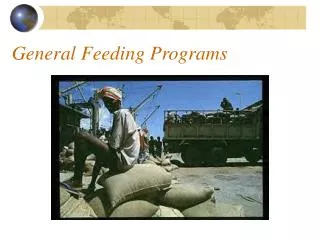

General Feeding Programs
E N D
Presentation Transcript
Objectives: Ensure adequate food supply for entire population Prevent malnutrition, and excess morbidity, mortality associated with malnutrition Target group: All affected people Be aware of biases in access General Feeding Programs
General Feeding Programs • General rations should be: • Nutritionally adequate • Familiar • Reasonable in preparation requirements • Diverse, palatable, digestible • Continually accessible • Approximately 0.5 kg/person/day = 90 kg/household of 6 people/month
General Feeding Programs • Ration composition: • Energy >=2100 kcals pppd • Fat 17-30% of kcals • Protein >12% of kcals • Micronutrient quality • Commodities: • Basic commodities: cereal, pulse/fish/meat, oil • Complementary foods: fresh meat/fish, vegetables/fruit, nuts, fortified cereal blends, sugar, condiments, salt (iodized), spices
General Feeding Programs: Operational Issues • Selecting a distribution site • “Wet” vs. “dry” rations • Registration • Staffing, training and supervision • Timing of distribution • Distribution and entitlement awareness • Monitoring
General Feeding Programs: Phasing Out • Population movement • New site • Resettlement • Establishment of other food sources • Long-term displacement • Integration into host community